Cold-Climate Inverter Heat Pumps vs. High-Efficiency Gas Furnaces: 2026 Engineering Guide
Compare variable-capacity inverter heat pumps against 98% AFUE condensing gas furnaces: SEER2 ratings, COP at -15°F, operating costs, and decibels.

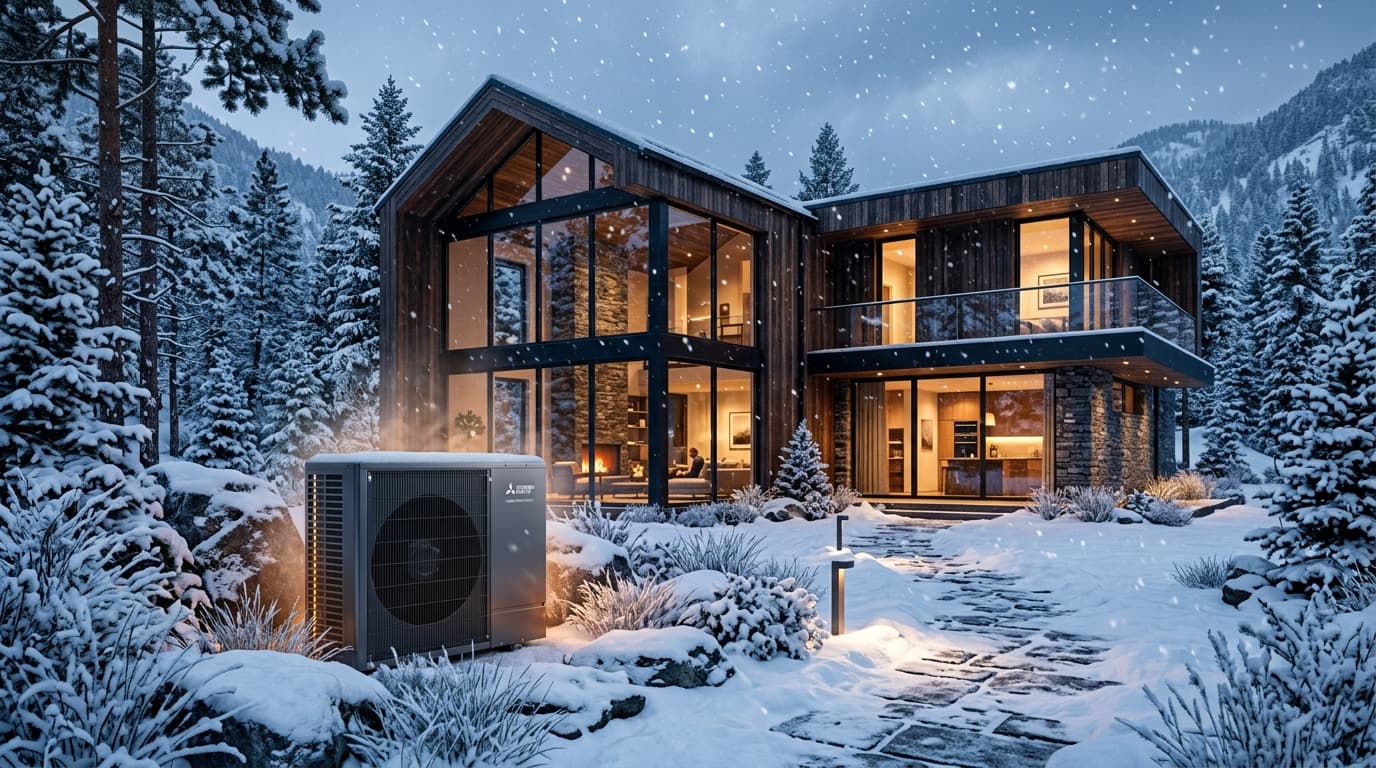
| Engineering Metric | Cold-Climate Inverter Heat Pump | 96% Modulating Condensing Gas Furnace |
|---|---|---|
| Thermodynamic Efficiency | COP 2.0 – 4.2 (200% to 420% efficiency) | AFUE 96% – 98% (Theoretical max 98%) |
| Sub-Zero Heating Capacity | 100% Capacity at 5°F; 80% at -15°F | 100% Unaffected by outdoor air temp |
| Supply Air Temperature | Gentle, continuous 95°F – 105°F | Intense, cycling 125°F – 140°F |
| Refrigerant Chemistry | Low-GWP R-454B / R-32 (AIM Act Compliant) | N/A (Combustion heat exchanger) |
| Cooling & Dehumidification | Built-In Air Conditioner (Up to 24 SEER2) | Requires separate AC condenser coil |
| Federal Tax Credit (IRA) | Up to $2,000 Direct Credit (Section 25C) | Up to $600 Direct Credit (Section 25C) |
| Installed Cost Range | $12,000 – $22,000 (Complete split system) | $7,500 – $14,000 (Furnace replacement) |
Executive Architectural & Engineering Overview: The Residential Decarbonization Epoch
In the realm of high-performance residential mechanical engineering, heating, ventilation, and air conditioning (HVAC) systems represent the single largest operational energy consumer, accounting for over 45% to 55% of total household energy expenditure. For nearly a century, the high-efficiency natural gas or propane furnace—delivering roaring, instantaneous 130°F supply air from a combustion burner—was the unchallenged king of winter comfort in northern climates.
However, an engineering paradigm shift has swept through residential building science. Driven by breakthroughs in variable-speed inverter compressor technology, low-GWP (Global Warming Potential) synthetic refrigerants, and municipal building decarbonization mandates, Cold-Climate Inverter Heat Pumps (ccHPs) have dismantled the historical limitation that heat pumps could only operate efficiently in the mild Sunbelt. Modern hyper-heating inverter systems now extract usable thermodynamic heat from ambient outdoor air at temperatures plummeting to -15°F (-26°C) and beyond, maintaining 100% rated thermal heating capacity with extraordinary energy efficiency.
When specifying mechanical heating infrastructure for a luxury custom home build or gut renovation in 2026, mechanical engineers and homeowners face a high-stakes engineering crossroad:
- Thermodynamic Performance Across Extreme Temperature Deltas: Evaluating the Coefficient of Performance (COP) of variable-capacity inverter heat pumps against the 96% to 98% Annual Fuel Utilization Efficiency (AFUE) of modulating condensing gas furnaces.
- The New M1 Efficiency Testing Metrics: Deciphering the 2023 Department of Energy (DOE) test procedures governing SEER2, EER2, and HSPF2 under realistic external static pressure loads (0.50 in. w.g.).
- The Economic "Spark Spread": Calculating real-world operating utility costs by analyzing local electricity rates ($/kWh) versus natural gas prices ($/therm) across diverse geographical tariffs.
- Supply Air Thermal Delivery Dynamics: The architectural comfort distinction between continuous, gentle, 95°F to 105°F heat-pump air circulation versus the blast-and-rest cycling of 130°F combustion furnaces.
- Federal & State Incentive Integration: Leveraging the Inflation Reduction Act (IRA Section 25C tax credits up to $2,000 and Section 50121 HOMES rebates up to $8,000) to balance initial capital expenditures.
The question in 2026 is no longer whether a heat pump can heat a home in sub-zero winter temperatures; the question is how to engineer the building envelope and duct static pressure so the system operates at a seasonal COP exceeding 2.5 without ever engaging auxiliary electric resistance strip heaters.
By dissecting the thermodynamic refrigeration cycle, cold-climate inverter kinematics, and 20-year lifecycle financial models, this guide provides the empirical foundation required to execute a high-performance mechanical specification.
---
Thermodynamic Physics: The Vapor-Compression Cycle & The Inverter Revolution
To understand how a machine can extract heat from freezing outdoor winter air, one must examine the fundamental physics of the Vapor-Compression Refrigeration Cycle.
The First and Second Laws of Thermodynamics
Heat never flows spontaneously from a colder body to a warmer body; it flows from hot to cold. However, by introducing mechanical work (compressor electrical energy), a heat pump forces heat to flow in reverse:
- Ambient outdoor air at 0°F (-18°C) still contains immense thermal energy. In absolute physics, absolute zero is -459.67°F (-273.15°C / 0 Kelvin). Any outdoor temperature above absolute zero contains ambient kinetic heat in its molecular gas lattice.
- The heat pump circulates an engineered chemical refrigerant whose boiling point is far below outdoor freezing temperatures (e.g., R-454B boils at -60°F / -51°C at atmospheric pressure).
- When freezing 0°F outdoor air is blown across the outdoor evaporator coil, the even colder (-15°F) liquid refrigerant boils into a vapor, absorbing ambient latent heat directly from the winter air.
- The compressor then pressurizes this vapor. Compressing a gas dramatically drives up its temperature and pressure (Boyle's and Gay-Lussac's gas laws). The discharge vapor superheats to 125°F to 150°F.
- This superheated gas is piped into the indoor air handler coil, where the cooler 70°F indoor room air condenses the refrigerant back into a liquid, releasing its absorbed heat directly into the living space.
+-------------------------------------------------------------------------+
|                THE VAPOR-COMPRESSION REVERSE HEATING CYCLE              |
+-------------------------------------------------------------------------+
   OUTDOOR AIR (0°F / Freezing Winter Ambient)
        │
        ▼ (Heat absorbed by boiling refrigerant)
   [OUTDOOR EVAPORATOR COIL] (Refrigerant at -15°F Boils to Gas)
        │
        ▼ (Refrigerant vapor routed to compressor)
   [VARIABLE-SPEED INVERTER COMPRESSOR] ──(Mechanical Work Input)
        │
        ▼ (Gas superheated under 380 psi pressure to 140°F)
   [INDOOR CONDENSER COIL] ──> (Heat Rejected into 70°F Living Room Air)
        │
        ▼ (Refrigerant condenses back into high-pressure liquid)
   [ELECTRONIC EXPANSION VALVE (EEV)] ──(Pressure Drops / Chills)
        │
        └───(Liquid returns to outdoor coil to repeat cycle)───┘
+-------------------------------------------------------------------------+
Inverter-Driven Rotary Compressors vs. Single-Stage Gas Cycling
The breakthrough separating modern cold-climate heat pumps from obsolete 1990s units is the DC Inverter Motor:
- Traditional Single-Stage HVAC: Operates like a light switch: 100% ON or 100% OFF. On a mild 40°F day, a single-stage furnace blasts at maximum output for 6 minutes, overshoots the thermostat by 2 degrees, and shuts down for 20 minutes. This blast-and-rest cycle causes severe indoor temperature stratification, noisy duct expansion bangs, and high electrical inrush current.
- Inverter-Modulating Technology: Utilizes digital variable-frequency drives (VFD) that modulate the rotational speed of twin-rotary or scroll compressors in increments of 1 Hz. The compressor ramps smoothly between 15% and 100% of maximum capacity, matching the home's real-time heating loss hour by hour.
- Continuous Laminar Comfort: The system runs continuously at ultra-low speeds, gently circulating conditioned air, maintaining indoor temperatures within 0.5°F of the thermostat setpoint, and running virtually silent.
---
Refrigerant Chemistry: Transitioning to Low-GWP R-454B & R-32
The year 2025 marked a historic regulatory milestone in HVAC manufacturing: the formal phaseout of R-410A refrigerant under the EPA's AIM (American Innovation and Manufacturing) Act.
The Global Warming Potential (GWP) Mandate
Under federal climate rules, all residential split-system heat pumps and air conditioners manufactured after January 1, 2025, must utilize refrigerants with a Global Warming Potential of less than 700:
- R-410A (Phased Out): Had a catastrophic GWP of 2,088 (meaning one pound of released R-410A traps as much atmospheric heat as 2,088 pounds of carbon dioxide).
- R-454B (Opteon XL41): An HFO/HFC blend (68.9% R-32 / 31.1% R-1234yf) adopted by Carrier, Johnson Controls, and Trane. Delivers a GWP of 466 (a 78% reduction) with thermodynamic operating pressures nearly identical to R-410A.
- R-32 (Difluoromethane): A pure HFC refrigerant adopted by Daikin and Goodman. Delivers a GWP of 675, offering 12% higher thermal capacity and superior seasonal efficiency compared to R-410A.
The A2L Flammability Safety Standard (UL 60335-2-40)
Both R-454B and R-32 are classified under ASHRAE Standard 34 as Class A2L (Mildly Flammable):
- While A2L refrigerants are difficult to ignite and exhibit ultra-low burn velocities (less than 10 cm/sec), residential building codes mandate integrated Active Leak Detection Sensors inside all indoor air handlers.
- If a refrigerant leak is detected within the evaporator cabinet, the internal sensor automatically shuts down the compressor, isolates the refrigerant circuit, and energizes the indoor blower fan to continuously diffuse and dilute the vapor below 25% of its Lower Flammability Limit (LFL).
---
Metric Deconstruction: SEER2, HSPF2 & The Real-World M1 Testing Protocol
In January 2023, the U.S. Department of Energy (DOE) instituted the M1 Test Procedure (Appendix M1 to Subpart B of 10 CFR Part 430), completely overhauling how residential HVAC efficiency is measured and rated.
+-------------------------------------------------------------------------+
|                  HVAC EFFICIENCY TESTING REFORM (M1 PROTOCOL)           |
+-------------------------------------------------------------------------+
  OBSOLETE STANDARD (Pre-2023):
  - Rated at 0.10 to 0.20 in. w.g. External Static Pressure (ESP)
  - Simulated a fantasy duct system with zero friction
  - Inflated advertised ratings (SEER / HSPF) by 15% to 20%

  CONTEMPORARY DOE M1 STANDARD (2023 - Present):
  - Rated at 0.50 in. w.g. External Static Pressure (ESP)
  - Replicates realistic, high-friction residential duct systems
  - New Metrics: SEER2 (Cooling) and HSPF2 (Heating)
+-------------------------------------------------------------------------+
The Static Pressure Realism Shift
Under the old SEER and HSPF test standards, manufacturers tested equipment in laboratory settings with external static pressure (ESP) set to a negligible 0.10 to 0.20 inches of water column (in. w.g.). In the real world, no home has a duct system with 0.10 in. w.g. friction; real residential ductwork operates between 0.40 and 0.70 in. w.g.:
- The new SEER2 and HSPF2 standards force testing at a realistic 0.50 in. w.g..
- Because fan motors must work significantly harder to overcome this realistic friction, nominal numeric ratings dropped: an old 14.0 SEER unit equates to approximately 13.4 SEER2, and an old 8.2 HSPF unit equates to 7.0 HSPF2.
Coefficient of Performance (COP) Sizing
While seasonal ratings (HSPF2) provide broad annual estimates, architectural engineers evaluate heat pumps based on their instantaneous Coefficient of Performance (COP) at specific design outdoor temperatures: $$\text{COP} = \frac{\text{Thermal Heat Output (Watts)}}{\text{Electrical Energy Input (Watts)}}$$
- Electric Resistance Heat: Has a COP of exactly 1.0 (1 kW of electricity produces 1 kW of thermal heat / 3,412 BTUs).
- Standard Heat Pump at 47°F: Achieves a COP of 3.5 to 4.5 (1 kW of electricity delivers 3.5 to 4.5 kW of heat into the home—an effective efficiency of 350% to 450%).
- Cold-Climate Inverter Heat Pump at 5°F: Maintains an exceptional COP of 2.0 to 2.4 (over twice as efficient as electric baseboard heat).
- Condensing Gas Furnace: Has a maximum theoretical COP of 0.96 to 0.98 (96% to 98% AFUE; it can never produce more heat than the chemical energy contained within the gas fuel).
---
Cold-Climate Performance: Hyper-Heating vs. The Defrost Cycle Trap
The primary engineering achievement of modern cold-climate heat pumps (such as Mitsubishi Hyper-Heating INVERTER / H2i, Fujitsu Halcyon XLTH, or Daikin Aurora) is their ability to maintain full thermal capacity in sub-zero weather without auxiliary electric heat strips.
Flash-Injection Bypass Architecture
Traditional heat pumps lose over 50% of their heating capacity when outdoor temperatures drop from 47°F to 17°F because refrigerant mass flow plummets:
- Cold-climate systems solve this using Flash-Injection Refrigeration Circuits:
- - A sub-cooling heat exchanger diverts a portion of high-pressure liquid refrigerant through a micro-expansion valve, flashing it into a cold vapor.
- - This cold vapor is injected directly into an intermediate port within the compressor cylinder.
- - This secondary injection cools the compressor motor windings, allowing the compressor to spin at ultra-high frequencies (up to 120 Hz) without overheating.
- - Mass flow is maintained, allowing the heat pump to deliver 100% rated heating capacity at 5°F (-15°C) and maintain 80% capacity at -15°F (-26°C).
The Defrost Cycle Mechanics
When moist outdoor winter air passes across an outdoor coil operating at 20°F, atmospheric water vapor freezes onto the aluminum fins, forming an insulating blanket of white frost:
- If left unchecked, frost blocks airflow, choking heat extraction.
- Demand Defrost vs. Timed Defrost: Cheap heat pumps use crude timers that initiate a defrost cycle every 60 or 90 minutes regardless of need. Cold-climate systems utilize Microprocessor Demand Defrost: sensors monitor coil temperature and refrigerant pressure differential, initiating defrost only when airflow is truly restricted.
- The Reverse Defrost Cycle: The system temporarily reverses its four-way reversing valve into air-conditioning mode for 2 to 5 minutes, routing hot gas through the outdoor coil to melt the frost rapidly.
- Base Pan Heater Engineering: In extreme freezing climates, melting frost dripping off the outdoor coil will refreeze in the bottom metal base pan, turning into a solid block of ice that crushes the lower coil tubes and shatters fan blades. Certified cold-climate units must include a factory-installed thermostatically controlled electric base pan heater that keeps the drain holes open.
---
The Economic Spark Spread: Calculating Real-World Utility Operating Costs
A frequent point of confusion among homeowners is comparing the price of a kilowatt-hour ($$/\text{kWh}$$) of electricity to a therm of natural gas. Evaluating operating costs requires calculating the Spark Spread.
The Energy Unit Conversion Math
To compare fuel economics directly, convert both energy sources to equivalent Million BTUs (MMBtu):
- 1 Therm of Natural Gas = 100,000 BTUs ($$0.1 \text{ MMBtu}$$).
- 1 Kilowatt-Hour ($$\text{kWh}$$) of Electricity = 3,412 BTUs ($$0.003412 \text{ MMBtu}$$).
The Operating Cost Equation
The cost to generate 1,000,000 BTUs of useful heat into a home is expressed as: $$\text{Cost per MMBtu (Gas)} = \frac{\text{Gas Price per Therm} \times 10}{\text{AFUE Rating}}$$ $$\text{Cost per MMBtu (Heat Pump)} = \frac{\text{Electric Price per kWh} \times 293}{\text{Seasonal Average COP}}$$
Regional Economic Comparison Matrix (2026 Energy Pricing)
| Geographic Market / Energy Tariff | 96% AFUE Modulating Gas Furnace | Cold-Climate Inverter Heat Pump (Avg COP: 2.8) | Most Economical Heating System |
|---|---|---|---|
| Upper Midwest (Chicago / Minneapolis)
Gas: $1.10/therm \| Elec: $0.16/kWh | $11.45 per MMBtu | $16.74 per MMBtu | Natural Gas is 31% Cheaper to operate due to high regional electric rates. |
| Pacific Northwest (Seattle / Portland)
Gas: $1.45/therm \| Elec: $0.11/kWh | $15.10 per MMBtu | $11.51 per MMBtu | Heat Pump is 24% Cheaper due to abundant low-cost hydro-electricity. |
| Northeast Metro (Boston / New York)
Gas: $1.85/therm \| Elec: $0.26/kWh | $19.27 per MMBtu | $27.20 per MMBtu | Natural Gas is 29% Cheaper; Dual-Fuel Hybrid is optimal. |
| Propane / Fuel Oil Transition Markets
Propane: $3.20/gal \| Elec: $0.15/kWh | $36.57 per MMBtu (Propane @ 95%) | $15.69 per MMBtu | Heat Pump is 57% Cheaper (Massive financial savings over delivered fuels). |
The Dual-Fuel Hybrid Solution
In cold regions where electricity is expensive and natural gas is inexpensive, architects specify a Dual-Fuel Hybrid System:
- An inverter heat pump outdoor unit is paired with an indoor 96% condensing gas furnace instead of an electric air handler.
- An intelligent smart thermostat (such as Ecobee or Nest) monitors real-time outdoor temperature.
- Down to 30°F or 35°F (the thermal/economic balance point), the heat pump heats the home with superior efficiency and comfort.
- When outdoor temperatures drop into sub-zero territory, the system automatically shuts off the heat pump and fires the high-output gas furnace, capturing the economic advantages of both fuels.
---
Federal & State Incentives: The Inflation Reduction Act (IRA) Framework
The capital cost equation for heat pumps is heavily subsidized by federal legislation:
1. Section 25C Energy Efficient Home Improvement Credit
Under the Inflation Reduction Act, homeowners installing an Energy Star certified heat pump meeting Consortium for Energy Efficiency (CEE) Tier 1 standards qualify for:
- A direct federal tax credit equal to 30% of total project installation cost, capped at a maximum of $2,000 per year.
- This is a non-refundable tax credit applied directly against federal tax liability.
2. Section 50121 HOMES & HEEHRA Point-of-Sale Rebates
Administered by state energy offices:
- High-Efficiency Electric Home Rebate Act (HEEHRA): Provides up to $8,000 in direct point-of-sale discounts for heat pump installations for low-to-moderate-income households (earning under 150% of Area Median Income).
- Additional rebates of up to $4,000 for electrical service panel upgrades (to 200A) and $1,600 for whole-home air sealing and insulation.
---
Itemized Cost Schedule & Regional Labor Breakdown
A detailed capital breakdown reveals the true financial commitment required to execute high-performance mechanical retrofits.
Comprehensive 2026 Budget Breakdown ($18,500 Complete System Scope)
| Mechanical Scope / Component | Premium Equipment & Materials | Master Trade Craft Labor | Total Installed Cost | % of Budget | |---|---|---|---|---| | Cold-Climate Inverter Outdoor Unit (3-Ton ccHP) | $6,200 (Mitsubishi Hyper-Heating / Daikin Aurora) | $1,200 (HVAC mechanics setting pad, crane lift) | $7,400 | 40.0% | | Multi-Position Variable-Speed Air Handler | $3,400 (ECM motor, internal EEV, leak detection sensor) | $1,800 (Custom sheet metal plenum fabrication) | $5,200 | 28.1% | | Line-Set, Refrigerant & Vacuum Micron Pull | $850 (Insulated copper lines, nitrogen purge, R-454B) | $1,400 (Master EPA-certified tech brazing & evacuation) | $2,250 | 12.2% | | Electrical Service Run & Disconnect (240V 40A) | $450 (Conduit, Romex 8-AWG copper, fused disconnect) | $1,100 (Master Electrician panel hookup & breaker) | $1,550 | 8.4% | | Air Balancing & Static Pressure Testing | $0 (Included in trade installation package) | $600 (Diagnostic digital manometer & CFM hood audit) | $600 | 3.2% | | Smart Thermostat & Outdoor Temp Sensor | $350 (Ecobee Smart Thermostat Premium + remote sensors) | $250 (Wiring low-voltage controls and WiFi setup) | $600 | 3.2% | | Permits, HERS Testing & Engineering Load Calc | $250 (Municipal mechanical permit fees) | $650 (Certified Manual J/S/D engineering calculations) | $900 | 4.9% | | TOTALS | $11,500 | $7,000 | $18,500 | 100.0% |
Net Cost After Incentives
- Initial System Cost: $18,500
- Less Federal Section 25C Tax Credit: -$2,000
- Less Local Utility Clean Heat Rebate: -$1,500
- Net Out-of-Pocket Capital Investment: $15,000
---
Step-by-Step Installation & Commissioning Protocol
Executing an inverter heat pump installation requires absolute adherence to modern HVAC refrigeration standards. Traditional "rule of thumb" practices guarantee equipment breakdown.
Phase 1: ACCA Manual J Load Calculations & Sizing
- Never Size Based on Square Footage: The contractor must perform an ACCA Manual J Residential Load Calculation modeling window U-factors, wall insulation R-values, infiltration rates, and local 99% design winter temperatures.
- Duct Sizing Audit (ACCA Manual D): Verify that existing supply and return ductwork can deliver required airflow at an external static pressure under 0.50 in. w.g.. (Inverter blowers ramp motor speeds to overcome constricted ducts, driving electrical consumption up by 300%).
Phase 2: Structural Mounting & Line-Set Routing
- Elevated Outdoor Snow Stand: In northern climates, the outdoor unit must never sit directly on a ground concrete pad. Mount the unit on a heavy-duty structural steel stand elevated 12 to 18 inches above the historic local snow line, ensuring falling snow and melting defrost water cannot submerge the lower coil.
- Nitrogen-Purge Brazing: During copper line-set brazing, technicians must flow dry nitrogen gas (2 to 5 SCFH) continuously through the pipes. Brazing without nitrogen creates internal black copper oxide scale that flakes off, clogging microscopic electronic expansion valves and destroying inverter compressors within months.
Phase 3: Triple Evacuation & Deep Vacuum Micron Pull
- Pressure-test the system with dry nitrogen to 450 psi for 24 hours to verify absolute zero leakage.
- Connect a commercial two-stage vacuum pump and digital electronic micron gauge. Pull vacuum down below 500 microns and perform a 15-minute blank-off decay test. If vacuum rises above 1,000 microns, moisture or leaks remain in the lines.
Phase 4: Electronic Commissioning & Static Balancing
- Charge the system with virgin R-454B or R-32 by exact factory weight using digital refrigerant scales down to 0.1 ounce.
- Measure total external static pressure (TESP) across the indoor coil using a digital dual-port manometer. TESP must not exceed 0.50 in. w.g.
- Verify that the defrost base pan heater activates when ambient temperatures drop below 36°F.
---
Forensic Failure Analysis: Five Critical Heat Pump Defects
Forensic mechanical investigators document distinct failure pathways when high-performance inverter systems are installed incorrectly.
1. The Auxiliary Heat Strip Electric Bill Shock
- Physical Manifestation: Homeowner receives a staggering $1,200 electric bill in January after replacing a gas furnace with a heat pump.
- Root Forensic Cause: The installer configured the smart thermostat incorrectly, allowing the 10 kW auxiliary electric resistance heat strips to engage whenever indoor temperature was 1 degree below setpoint, rather than locking out heat strips down to 10°F.
- Mandatory Preventative Engineering: Program the thermostat compressor lock-out and auxiliary heat strip lock-out temperatures based on the home's engineered thermal balance point; rely 100% on the inverter compressor down to 5°F.
2. Base Pan Ice Glaciering & Outdoor Coil Rupture
- Physical Manifestation: Outdoor unit encased in a solid block of ice up to the fan hub, with bent copper tubes leaking refrigerant.
- Root Forensic Cause: Outdoor unit installed directly on a ground pad without an elevated snow stand or base pan heater. Melted defrost water pooled beneath the unit, refroze, and expanded upward into the aluminum fins.
- Mandatory Preventative Engineering: Mount outdoor heat pumps on minimum 12-inch heavy-duty elevated steel stands; verify continuous operation of an electric defrost base pan heater.
3. Electronic Expansion Valve (EEV) Slag Jamming
- Physical Manifestation: Compressor runs at 100% high frequency but produces zero heating or cooling; digital diagnostics throw "Low Suction Superheat" error codes.
- Root Forensic Cause: HVAC installers brazed copper line-sets without flowing dry nitrogen gas. Copper oxide scale formed inside the pipe, migrated into the microscopic EEV needle valve, and jammed the mechanism.
- Mandatory Preventative Engineering: Mandate continuous dry nitrogen purging during 100% of brazing operations; install liquid-line bi-directional filter-driers.
4. Blower Motor ECM Burnout & High Static Cavitation
- Physical Manifestation: Indoor variable-speed ECM blower motor burning out every 2 to 3 years; loud wind whistling through return grilles.
- Root Forensic Cause: Connecting a 3-ton heat pump requiring 1,200 CFM to an undersized duct system sized for 800 CFM. External static pressure reached 0.85 in. w.g., forcing the ECM motor to draw maximum amperage continuously to overcome resistance until thermal overload killed the electronics.
- Mandatory Preventative Engineering: Enforce ACCA Manual D duct sizing; measure total external static pressure prior to equipment selection; enlarge return air drop and filter grilles to 16x25 inches minimum.
5. Refrigerant Leak Sensor False Alarms (A2L Systems)
- Physical Manifestation: Heat pump system abruptly shuts down in the middle of winter, flashing error codes, with the indoor blower running continuously.
- Root Forensic Cause: Factory A2L refrigerant sensors inside the air handler triggered by volatile organic compounds from fresh construction paint, floor polyurethane, or aerosol hairsprays rather than an actual refrigerant leak.
- Mandatory Preventative Engineering: Seal return plenums during interior painting and renovation; calibrate A2L sensors in accordance with UL 60335-2-40 following construction completion.
---
Real-World Architectural Case Studies
Case Study 1: Sub-Zero Deep Retrofit — Minneapolis, Minnesota
- Architectural Scope: Complete conversion of a 4,200 sq. ft. historic 1912 Victorian residence from an ancient cast-iron oil boiler to an all-electric cold-climate heat pump system.
- Engineering Dilemma: Winter design temperature is -15°F. The home featured historic lath-and-plaster walls that prohibited installing new central ductwork chases.
- Applied Solutions:
- *Multi-Zone Ductless Hyper-Heating*: Installed a Mitsubishi M-Series H2i Multi-Zone Heat Pump System (48,000 BTU) paired with five architecturally concealed ceiling cassette units and two floor-mounted consoles.
- *Sub-Zero Capacity*: System maintained 100% rated heating capacity at 5°F and delivered reliable 70°F indoor comfort during a polar vortex drop to -22°F with zero auxiliary heat strips.
- *Incentive Capture*: Leveraged $2,000 in federal Section 25C tax credits plus a $3,500 local clean energy rebate.
- Financial Tally: Total Project Expenditure: $26,500; Net Cost After Rebates: $21,000; Annual Heating Fuel Savings vs. Heating Oil: $2,850/year (a 7.3-year payback).
Case Study 2: High-End Dual-Fuel Hybrid — Westchester County, New York
- Architectural Scope: Mechanical specification for a newly constructed 6,800 sq. ft. modern country manor with high regional electric rates ($0.28/kWh).
- Engineering Dilemma: The homeowner wanted to minimize their carbon footprint but refused to accept high winter electric utility bills during prolonged January freezing spells.
- Applied Solutions:
- *Dual-Fuel Architecture*: Installed a Carrier Infinity 24 GreenSpeed Inverter Heat Pump (24 SEER2 / 13.0 HSPF2) paired with a Carrier Infinity 98% Modulating Gas Furnace.
- *Economic Balance Point*: Programmed the Infinity System Control to heat with the heat pump down to 32°F (where COP exceeded 3.2), automatically switching to the 98% gas furnace when temperatures dropped below 32°F.
- *Performance*: Slashed overall carbon emissions by 65% while preserving optimal winter utility economics.
- Financial Tally: Total Mechanical System: $38,000; Annual Utility Cost Savings vs. Standard Baseline: $1,400/year.
---
Architectural Specification Guide: Master Division Standards
When specifying mechanical heating systems, architects enforce MasterFormat Division 23 standards:
Division 23 81 26 — Split-System Heat Pumps (Cold Climate)
- Certification: Equipment must be listed on the Northeast Energy Efficiency Partnerships (NEEP) Cold-Climate Air-Source Heat Pump Specification list.
- Capacity Retention: Minimum 100% rated heating capacity at 5°F (-15°C) and minimum 70% rated capacity at -15°F (-26°C) with minimum COP of 1.75 at 5°F.
- Efficiency Standards: Minimum 16.0 SEER2 and 8.5 HSPF2 tested in accordance with DOE 10 CFR Part 430 (Appendix M1).
- Refrigerant: Low-GWP Class A2L synthetic refrigerant (R-454B or R-32) conforming to EPA AIM Act regulations and UL 60335-2-40 safety protocols.
- Mounting: Structural steel equipment stand elevating outdoor coil minimum 12 inches above local finished snow grade.
---
General Contractor & HVAC Trade Vetting Guide
To ensure high-performance mechanical installation, apply strict contractor vetting standards:
Trade Vetting Checklist
- ACCA Quality Assured (QA) Contractor: Verify that the mechanical contractor is certified through the Air Conditioning Contractors of America (ACCA). Certified contractors perform formal Manual J load calculations rather than estimating by square footage.
- Nitrogen Purge & Deep Vacuum Tools: Ask the lead installer: "Do you use a digital micron gauge to measure vacuum, and what micron level do you pull down to before releasing refrigerant?" If they do not immediately answer "Below 500 microns with a nitrogen purge," do not hire them.
- NEEP Product Verification: Require the contractor to provide the official NEEP ccASHP Product Certificate for the exact model number quoted, confirming sub-zero heating capacity performance.
---
Frequently Asked Questions (Technical & Financial)
1. Can a heat pump really heat a home when outdoor temperatures drop below zero?
Yes. Modern Cold-Climate Heat Pumps (ccHPs) utilize variable-speed inverter-driven compressors and flash-injection refrigerant circuits that extract heat from outdoor air down to -15°F to -22°F (-26°C to -30°C). Systems certified by the Northeast Energy Efficiency Partnerships (NEEP) maintain 100% of their full heating capacity at 5°F without needing secondary electric resistance strip heaters.
2. Does heat pump supply air feel colder than air from a gas furnace?
Yes, and this is an engineered comfort advantage, not a defect. A traditional gas furnace blasts air out of supply registers at a scorching 120°F to 140°F for short 6-minute bursts, creating a drafty, drying cycle. An inverter heat pump runs continuously at low speeds, discharging gentle, steady air at 95°F to 105°F (which is above human body temperature of 98.6°F). This continuous circulation eliminates cold room corners, prevents air stratification, and keeps indoor humidity levels significantly higher and more comfortable.
3. What is a Dual-Fuel Hybrid heating system and why is it popular?
A dual-fuel hybrid system pairs an electric inverter heat pump outdoor unit with a high-efficiency natural gas furnace indoors. An intelligent thermostat monitors outdoor temperatures and electricity vs. gas utility tariffs. During mild and moderate weather (down to 30°F or 35°F), the heat pump heats the home with extreme efficiency. On sub-zero winter nights, the system switches automatically to the gas furnace. This captures the carbon reduction and efficiency benefits of a heat pump while shielding the homeowner from high winter electric bills in regions with expensive electricity.
4. What is the difference between SEER/HSPF and SEER2/HSPF2?
In 2023, the Department of Energy replaced SEER and HSPF with SEER2 and HSPF2 (the M1 testing standard). Under the old test, equipment was tested under artificially low duct resistance (0.1 to 0.2 in. w.g.). The new M1 standard tests equipment under a realistic static pressure of 0.50 in. w.g., accurately reflecting real residential duct systems. Because equipment works harder against realistic friction, SEER2 and HSPF2 numerical ratings are approximately 5% to 15% lower than old ratings, but represent true real-world operating efficiency.
5. Why are R-410A heat pumps being phased out?
Under the EPA's American Innovation and Manufacturing (AIM) Act, R-410A refrigerant is being phased out due to its high Global Warming Potential (GWP of 2,088). Beginning in 2025, all new residential split systems must use low-GWP refrigerants (such as R-454B with a GWP of 466 or R-32 with a GWP of 675). These new refrigerants reduce carbon emissions by over 75% while offering slightly higher thermodynamic efficiency.
6. Do heat pumps require expensive electrical service panel upgrades?
Sometimes. If your home currently utilizes natural gas heating and has an older 100-amp or 150-amp electrical service panel, adding a 3-ton to 5-ton heat pump (plus potential auxiliary electric heat strips) may require upgrading your main electrical service to a 200-amp panel. Fortunately, the federal Inflation Reduction Act provides up to $4,000 in direct tax credits and rebates specifically to cover the cost of electrical panel upgrades when installing a clean heat pump system.
7. How long do cold-climate inverter heat pumps last?
A high-quality inverter heat pump has an expected service life of 15 to 20 years when properly maintained with annual filter changes and outdoor coil cleanings. Because inverter compressors ramp their speeds smoothly rather than slamming on and off at full torque, the mechanical motor experiences significantly less thermal and mechanical fatigue than traditional single-stage compressors.
Frequently Asked Questions
Written by Elena Rostova, LEED AP
Building Science & Energy Efficiency SpecialistElena is an architectural engineer and certified LEED AP BD+C consultant. Her work centers on thermal envelope dynamics, continuous insulation systems, cold-climate inverter heat pumps, and achieving Net-Zero residential benchmarks.
Related Research in HVAC & Energy
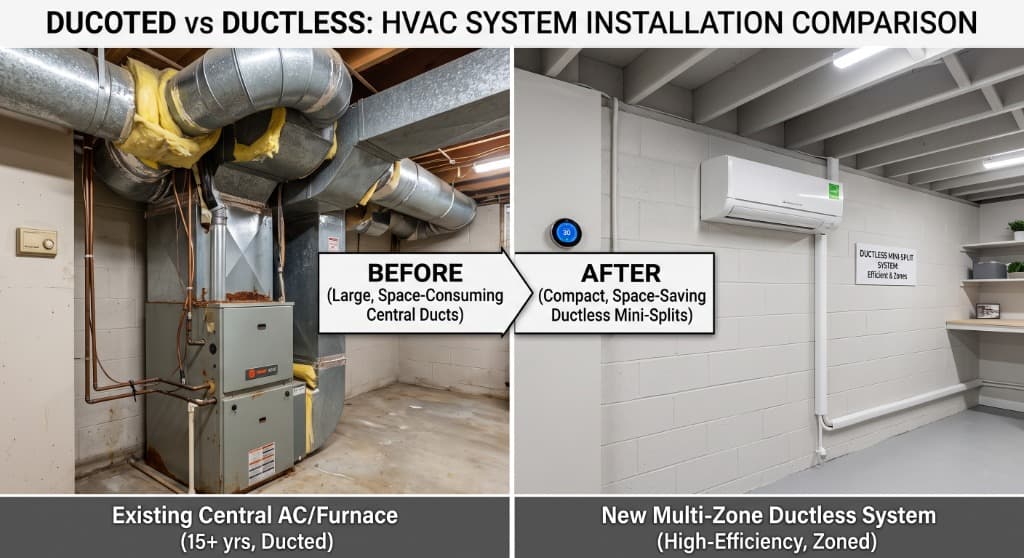
Ducted vs. Ductless Mini-Splits: Concealed Architecture & Multi-Zone Thermal Comfort
Architectural integration of mini-split systems: concealed slim-duct air handlers, branch box refrigeration, line set concealment, and individual room zoning.
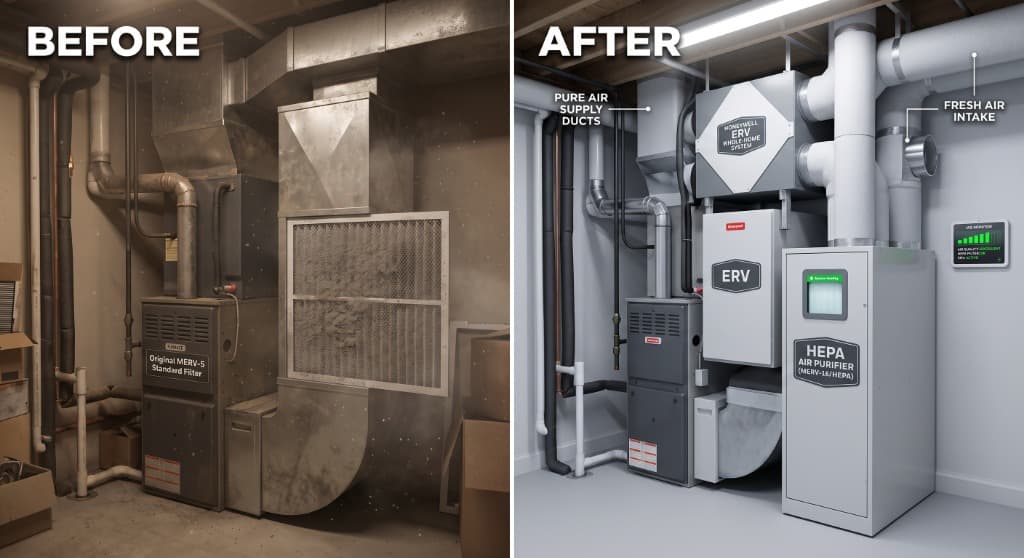
Indoor Air Quality (IAQ) Masterclass: MERV 16, True HEPA & Energy Recovery Ventilation
Eliminate PM2.5, wildfire smoke, and VOCs: whole-home HEPA bypass filtration, deep 5-inch MERV 16 media, ERVs vs HRVs, and active relative humidity control.
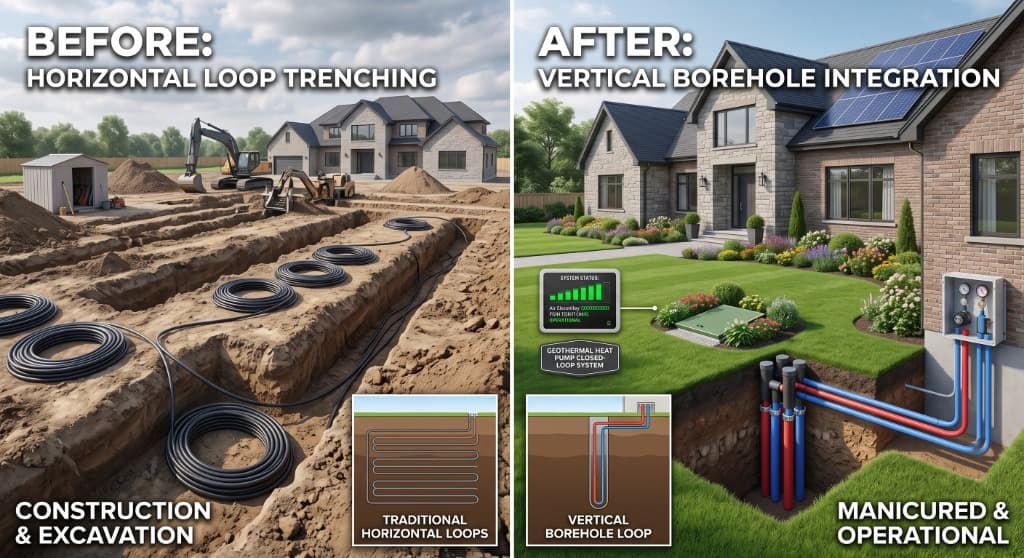
Geothermal Ground-Source Heat Pumps: Closed-Loop Borehole Physics & 30-Year ROI
Complete engineering guide to residential geothermal heat pumps: vertical borehole loops, COP 4.5+ thermodynamic efficiency, drilling costs, and federal tax credits.