Class 4 Impact-Resistant Roofing: UL 2218 Testing, Hail Resilience & Insurance Discounts
Learn how UL 2218 Class 4 impact-resistant shingles and metal roofs resist hail damage, qualify for 15% to 30% homeowner insurance discounts, and protect equity.

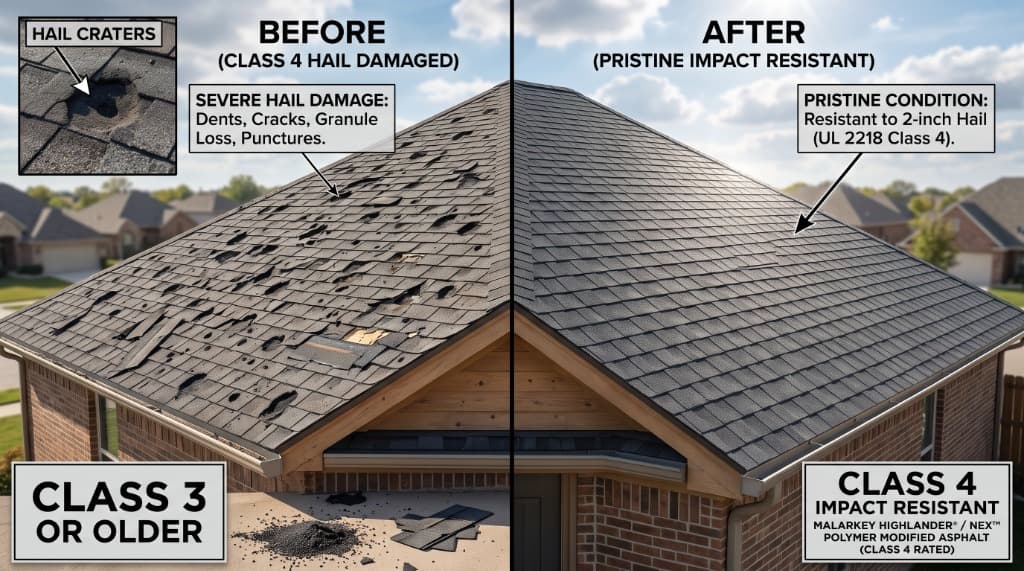
| Roofing Material System | Impact Certification | Kinetic Energy Absorption Mechanism | Annual Insurance Discount | Expected Hail Lifespan |
|---|---|---|---|---|
| Standard Class 1 Shingles | UL 2218 Class 1 (Fails 2" hail) | Brittle fracture / Granule loss | 0% (Baseline rate) | 7 – 12 Years in Hail Alley |
| SBS-Modified Asphalt Shingles | UL 2218 Class 4 (Certified) | Elastomeric rubber stretch & rebound | 15% – 30% Annual Discount | 20 – 30 Years (Resilient) |
| 24-Gauge Standing Seam Metal | UL 2218 Class 4 (Certified) | High tensile ductility (Minor dimples) | 25% – 35% Annual Discount | 50+ Years (Leak-Proof) |
| Synthetic Composite Slate (DaVinci) | UL 2218 Class 4 (Certified) | Virgin polyolefin flexural memory | 25% – 35% Annual Discount | 50 Years (Indestructible) |
Executive Architectural & Engineering Overview: The Hailstorm Defense Paradigm
In North American residential construction, severe convective storms represent the single most volatile and costly natural hazard confronting the building envelope. Across the vast geographical corridor stretching from the Gulf Coast of Texas through the Great Plains to the Colorado Front Range and the Upper Midwest—a region meteorologists designate as "Hail Alley"—severe hailstorms inflict over $10 billion to $15 billion in residential property damage every single year.
A single 15-minute supercell convective thunderstorm generating golf-ball to tennis-ball sized hail can completely destroy standard asphalt roofing across thousands of homes, fracturing structural mats, shattering gutters, and triggering widespread water intrusion. For luxury homeowners, the consequence is not merely property damage; it is a cycle of escalating insurance premiums, sudden policy cancellations, and the recurring disruption of full roof replacements.
To fortify structures against extreme storm events, architectural building science established Class 4 Impact-Resistant Roofing. A Class 4 rating represents the highest benchmark of impact toughness achievable under standard laboratory testing protocols. Achieving this rating requires an uncompromising synthesis of material physics, polymer engineering, and structural fastening:
- Impact Kinetic Energy & Terminal Velocity Dynamics: Resisting direct mechanical point impacts exceeding 30 to 35 foot-pounds of kinetic energy delivered by dense ice spheres traveling at 70 to 80 miles per hour.
- The UL 2218 vs. FM 4473 Testing Protocols: The scientific methodology of certifying impact resistance through steel ball drops and pneumatic ice-cannon bombardment.
- Polymer Modification Science: Engineering flexible, rubberized Styrene-Butadiene-Styrene (SBS) asphalt matrices, ductile 24-gauge structural steel, and high-elasticity synthetic polymers that absorb and dissipate kinetic energy without structural fracture.
- Homeowner Insurance Financial Modeling: Unlocking 15% to 35% annual discounts on homeowner insurance premiums, transforming an envelope upgrade into a self-funding financial asset.
- The Cosmetic Damage Waiver Endorsement Trap: Navigating fine-print insurance policy clauses that allow carriers to deny claims for hail-dented metal or composite roofs that remain structurally watertight.
In severe storm corridors, an impact-resistant roof is not an aesthetic luxury; it is a structural shield that preserves the envelope and an actuarial hedge that protects household capital.
By analyzing the kinetic mechanics of hailstorms, laboratory certification standards, and multi-year insurance economics, this guide empowers architects and homeowners to specify roofing systems that survive severe weather intact while optimizing financial returns.
---
The Physics of Hail Impacts: Terminal Velocity & Kinetic Energy Mechanics
To engineer an impact-resistant roof, one must first analyze the devastating physics of falling hail.
The Kinetic Energy Formula
A falling hailstone is a ballistic projectile governed by Newtonian kinetic physics: $$E_k = rac{1}{2} m v^2$$
- Where $$E_k$$ is kinetic energy (in Joules or foot-pounds), $$m$$ is the mass of the hailstone, and $$v$$ is its terminal falling velocity.
- Because velocity is squared ($$v^2$$), any increase in falling speed multiplies the destructive kinetic energy exponentially.
+-------------------------------------------------------------------------+
|                  HAILSTONE SIZE, VELOCITY & IMPACT ENERGY               |
+-------------------------------------------------------------------------+
  DIAMETER         APPROX MASS      TERMINAL VELOCITY      KINETIC IMPACT
  1.00" (Quarter)    0.02 lbs            40 mph             1.5 ft-lbs
  1.50" (Walnut)     0.07 lbs            55 mph             6.8 ft-lbs
  2.00" (Hen Egg)    0.16 lbs            76 mph            22.4 ft-lbs
  2.50" (Tennis)     0.32 lbs            84 mph            36.8 ft-lbs
  3.00" (Baseball)   0.55 lbs            94 mph            75.2 ft-lbs
+-------------------------------------------------------------------------+
Hailstone Aerodynamics & Density
A common misconception is that hail is soft, fluffy frozen snow. True storm hailstones are dense, layered globes of solid ice formed when strong thunderstorm updrafts (exceeding 100 mph) cycle ice pellets repeatedly through supercooled water clouds:
- High Density: Severe hailstones achieve an average density of 0.90 to 0.92 grams per cubic centimeter—virtually identical to solid pure ice.
- Terminal Velocity: A 2.0-inch hailstone falls at a terminal velocity of approximately 76 miles per hour (111 feet per second). When combined with horizontal 50 mph wind gusts, the hailstone strikes the pitched roof at an oblique vector, delivering both severe normal impact force and high shear stress.
- Concentrated Point Load: Upon impact, all 22 to 35 foot-pounds of kinetic energy is concentrated into an instantaneous contact area smaller than a dime (less than 0.2 square inches). Standard, brittle asphalt shingles cannot flex fast enough to absorb this energy; the fiberglass core fractures instantly.
---
Laboratory Testing Standards: UL 2218 vs. FM 4473
The roofing industry relies on two rigorous laboratory standards to certify impact resistance. Understanding the difference between these tests is critical for evaluating product claims.
1. The UL 2218 Steel Ball Drop Test
Developed by Underwriters Laboratories in 1996, UL 2218 (Standard for Impact Resistance of Prepared Roof Covering Materials) is the universal benchmark recognized by insurance underwriters:
- The Protocol: Steel balls of four varying diameters are dropped through a vertical guide tube from a height of 20 feet directly onto the roofing material.
- The Classes:
- - Class 1: Resists a 25-inch diameter steel ball.
- - Class 2: Resists a 50-inch diameter steel ball.
- - Class 3: Resists a 75-inch diameter steel ball.
- - Class 4 (The Maximum Rating): Resists a 0-inch solid steel ball weighing 1.2 pounds, dropped from 20 feet twice in the exact same location, delivering 32 foot-pounds of kinetic impact energy.
- The Failure Criterion: After the impact, the backside of the shingle or panel is inspected under 5x optical magnification. If there is any cracking, tearing, splitting, or rupture through the core mat, the product fails. Class 4 materials must show zero structural fracturing.
2. The FM 4473 Pneumatic Ice-Cannon Test
Developed by FM Approvals (Factory Mutual), FM 4473 is preferred by commercial engineers because it utilizes real ice balls rather than solid steel:
- Real frozen ice spheres (conditioned to -5°F) are loaded into a compressed-air pneumatic cannon and fired at high velocities directly at test roof panels.
- Class 4 certification under FM 4473 requires withstanding 2.0-inch ice balls fired at 76 miles per hour (111 fps) with zero visible cracking or substrate penetration.
---
Material Science & Impact Mechanics: How Materials Absorb Kinetic Energy
Different roofing materials manage the massive kinetic shock of hail through fundamentally different physical mechanisms.
+-------------------------------------------------------------------------+
|                  IMPACT ABSORPTION MECHANICS COMPARISON                 |
+-------------------------------------------------------------------------+
  1. SBS-MODIFIED RUBBERIZED ASPHALT (Malarkey / GAF Timberline ArmorShield):
     [Kinetic Shock] ──> [Styrene-Butadiene Polymer Elastic Recovery] ──> Resilient
     *Elastomeric polymer chains stretch and rebound; zero fiberglass fracture*

  2. 24-GAUGE STRUCTURAL GALVALUME STEEL:
     [Kinetic Shock] ──> [High Yield Strength & Tensile Ductility] ──> Tough
     *Steel absorbs shock; may dimple cosmetically, but 100% leak-proof*

  3. SYNTHETIC COMPOSITE ELASTOMERS (DaVinci / Brava):
     [Kinetic Shock] ──> [Thermoplastic Flexural Memory] ──> Indestructible
     *Polymer tiles absorb impact like an automotive bumper; zero damage*
+-------------------------------------------------------------------------+
1. SBS-Modified Rubberized Asphalt Shingles
Standard shingles use oxidized asphalt, which is hard and brittle. Class 4 asphalt shingles (such as Malarkey Legacy, CertainTeed NorthGate, or GAF Timberline ArmorShield II) incorporate Styrene-Butadiene-Styrene (SBS) polymer modification:
- The asphalt is blended with SBS thermoplastic synthetic rubber.
- The rubber polymer forms a molecular matrix that imparts elastic recovery and high flexural ductility.
- When a 2-inch hailstone strikes an SBS shingle, the rubberized matrix acts like a microscopic trampoline: it stretches under the impact, absorbs and dissipates the kinetic shock wave, and immediately rebounds to its original shape without tearing the internal fiberglass mat.
- Furthermore, the rubberized coating holds ceramic granules significantly tighter than standard asphalt, reducing granule loss during hailstorms by over 60% to 80%.
2. Heavy-Gauge Standing Seam Metal
Structural 24-gauge Galvalume steel shingles or standing seam panels manage impact through high tensile yield strength:
- Steel has an ultimate tensile strength exceeding 55,000 psi.
- When struck by severe hail, the steel absorbs energy through slight ductile deformation. While 2.5-inch hail can leave shallow cosmetic dimples, the structural integrity remains un-breached, and the roof will never leak.
3. Synthetic Polymer Composites
Synthetic composite tiles (such as DaVinci Roofscapes or Brava Roof Tile) are molded from advanced virgin polyolefin elastomers:
- These materials possess high flexural modulus and permanent elastic memory.
- When struck by hail or heavy tool drops, the polymer flexes elastically and snaps back instantly, showing zero denting, zero chipping, and zero cracking.
---
The Insurance Economics: Unlocking Annual Premium Discounts
The primary economic catalyst driving the adoption of Class 4 impact-resistant roofing is the aggressive financial incentive offered by major property and casualty insurance underwriters (such as State Farm, Allstate, USAA, Travelers, and Liberty Mutual).
Hail Alley Premium Surcharges
In high-risk storm states (Texas, Colorado, Oklahoma, Kansas, Nebraska, Minnesota), homeowner insurance premiums have exploded over the past five years:
- Annual insurance premiums on a luxury home valued at $1,000,000 to $1,500,000 frequently range from $4,500 to over $8,500 per year.
- In many storm-prone counties, carriers now impose mandatory 1% or 2% wind and hail deductibles (meaning a homeowner must pay the first $10,000 to $20,000 out of pocket on every hail claim).
The Class 4 Insurance Discount Structure
To reduce catastrophic claim payouts, insurance carriers offer permanent annual policy discounts for verified Class 4 roofs:
- Average Discount Range: 15% to 35% discount off the total dwelling property premium.
- In Texas and Colorado, insurance discounts routinely exceed 25% to 30%.
- *Financial Example*: On a luxury home with a $6,000 annual insurance premium, a 25% Class 4 discount yields $1,500 in cash savings every single year.
The Payback Period Calculation
While Class 4 impact-resistant shingles command a 15% to 30% material cost premium over standard architectural shingles:
- The incremental cost to upgrade a 3,500 sq. ft. roof to Class 4 SBS shingles is typically $3,500 to $5,000.
- With annual insurance savings of $1,200 to $1,800, the payback period is achieved in just 2.5 to 4 years.
- Over a 20-year service life, the Class 4 roof generates over $25,000 to $35,000 in net cumulative cash savings, making it one of the highest-ROI capital improvements a homeowner can execute.
---
The Fine-Print Warning: The "Cosmetic Damage Waiver" Endorsement
While Class 4 roofs unlock massive insurance savings, homeowners must beware of an aggressive actuarial trap: the Cosmetic Damage Exclusion Endorsement.
What is a Cosmetic Damage Waiver?
To minimize hail payouts, many insurance carriers now insert a clause stating:
"We will not pay for cosmetic damage to exterior roof coverings caused by the peril of hail. Cosmetic damage means marring, pitting, or denting that alters the physical appearance of the roof covering but does not result in water intrusion."
How It Impacts Different Materials:
- Asphalt Shingles: Cosmetic waivers are less problematic for shingles because hail damage to shingles almost always involves granule loss or mat tearing, which is categorized as functional structural damage.
- Metal Roofing (Standing Seam): Severe Risk. If you sign an insurance policy containing a Cosmetic Damage Waiver and install an expensive $50,000 standing seam metal roof, a severe hailstorm may leave dozens of visible shallow dimples across the metal. Because the metal did not rupture and is not leaking, the insurance carrier will invoke the cosmetic waiver and pay $0.00, leaving you with an aesthetically damaged roof.
- The Strategic Rule: If you install standing seam metal or copper roofing, never sign an insurance policy containing a cosmetic damage waiver. Insist on a policy that covers both functional and aesthetic hail damage, even if the annual premium is slightly higher.
---
Itemized Cost Schedule & Regional Labor Breakdown
Upgrading to a certified Class 4 roofing system represents a modest incremental investment that delivers immense financial protection.
Comprehensive 2026 Cost Comparison (3,500 Sq. Ft. Roof / 35 Roofing Squares)
| Roofing System / Tier | Material Cost (per Sq.) | Labor & Installation (per Sq.) | Total Installed Cost | Annual Insurance Discount | |---|---|---|---|---| | Standard Class 1 Architectural Shingles | $140 – $180 | $320 – $420 | $16,100 – $21,000 | $0.00 (Baseline rate) | | Class 4 SBS-Modified Asphalt Shingles | $210 – $270 | $350 – $460 | $19,600 – $25,550 | -$1,200 – -$2,100 / year (20-30%) | | Class 4 24-Gauge Standing Seam Metal | $450 – $750 | $750 – $1,200 | $42,000 – $68,250 | -$1,500 – -$2,500 / year (25-35%) | | Class 4 Synthetic Composite Slate (DaVinci) | $550 – $700 | $650 – $950 | $42,000 – $57,750 | -$1,500 – -$2,500 / year (25-35%) |
Net 10-Year Financial Comparison
When factoring in insurance premium discounts and avoided deductible expenses over a 10-year period:
- Standard Shingles: Cost to install ($18,500) + 1 Hail Deductible Claim ($5,000) = $23,500 net cost.
- Class 4 SBS Shingles: Cost to install ($22,500) - 10 Years Insurance Discounts ($15,000) - Zero Deductible Claims ($0) = $7,500 net cost.
- The Class 4 roof saves the homeowner $16,000 in net cash over a single decade.
---
Step-by-Step Installation & Certification Protocol
To legally claim your insurance premium discount, the installation must follow a strict administrative and technical protocol:
Phase 1: Material Verification & Delivery Audit
- Inspect product packaging upon delivery. The bundles must feature the embossed UL 2218 Class 4 certification label directly on the factory wrapper. Take high-resolution photographs of the labels for insurance submission.
- Confirm matching Class 4 impact-resistant hip and ridge cap shingles are on site. (Many unscrupulous contractors cut costs by installing Class 4 field shingles paired with cheap standard Class 1 ridge caps, which fails insurance audits).
Phase 2: Decking & High-Impact Underlayment
- Fasten 1/2-inch or 5/8-inch CDX plywood deck securely with 8d ring-shank nails every 6 inches on center.
- Install a continuous layer of high-temperature polymer-modified self-adhering underlayment (ASTM D1970) across all eaves, valleys, and rakes.
Phase 3: Precision Fastening & Sealant Bonding
- Use six hot-dip galvanized roofing nails per shingle tab (high-wind pattern), driving fasteners strictly through the reinforced nail zone.
- Ensure ambient temperatures during installation are above 45°F to ensure that the factory heat-activated SBS adhesive sealant strip bonds properly.
Phase 4: Submitting Form IBHS / Proof of Certification
- Following installation, the licensed roofing contractor must complete and sign the formal Roofing Installation Certificate (Form IBHS / State Insurance Commission Form).
- Submit the certificate, proof of payment, and manufacturer UL 2218 Class 4 product documentation to your insurance underwriting broker.
- The carrier updates your policy file, applying the recurring annual premium credit starting from the date of final roof completion.
---
Forensic Failure Analysis: Five Critical Hail Roofing Defects
Forensic insurance investigations document distinct failure mechanisms when substandard materials are exposed to severe storms.
1. The Concealed Fiberglass Mat Fracture
- Physical Manifestation: Shingles appear completely intact from ground level, but severe interior ceiling leaks occur 6 months later during heavy rain.
- Root Forensic Cause: Standard Class 1 shingles struck by 1.75-inch hail. The ceramic granules on top masked the damage, but the brittle fiberglass mat underneath suffered catastrophic cross-directional tensile fracture.
- Mandatory Preventative Engineering: Specify SBS polymer-modified asphalt shingles; perform tactile finger depression tests during post-storm inspections to detect spongy, fractured internal mats.
2. Micro-Granule Loss & Accelerated UV Photodegradation
- Physical Manifestation: Circular dark spots appearing across the roof field where granules have vanished, with the raw black asphalt turning soft and gummy.
- Root Forensic Cause: Hail impacts dislodging granules from non-rubberized asphalt. Without ceramic granule UV protection, solar radiation rapidly degrades the exposed bitumen.
- Mandatory Preventative Engineering: Install Class 4 shingles containing SBS rubber polymers that lock ceramic granules into the matrix with 80% higher bond adhesion.
3. Ridge Cap Shingle Blow-Off & Hail Rupture
- Physical Manifestation: All field shingles survive hail intact, but the entire ridge cap is shattered, cracked, and blowing off the roof peak.
- Root Forensic Cause: The roofer used standard 3-tab shingles bent over the ridge to save money, rather than installing dedicated, factory-manufactured Class 4 impact-resistant hip and ridge caps.
- Mandatory Preventative Engineering: Mandate that hip and ridge accessories match the field shingles’ UL 2218 Class 4 rating in the written contract.
4. Cosmetic Dimpling on Thin-Gauge Metal
- Physical Manifestation: Standing seam metal roof covered in thousands of visible dents after a severe storm, destroying curb appeal.
- Root Forensic Cause: Installing cheap, thin 26-gauge or 29-gauge metal with wide, flat pans lacking striations.
- Mandatory Preventative Engineering: Mandate heavy 24-gauge structural Galvalume steel; incorporate factory pencil ribs or striations that disguise micro-dimpling and increase torsional stiffness.
5. The Denied Claim Trap (Cosmetic Waiver)
- Physical Manifestation: Homeowner submits a $45,000 claim for hail-damaged metal roofing; the insurance company denies 100% of the payout.
- Root Forensic Cause: The homeowner unknowingly agreed to a Cosmetic Damage Waiver endorsement on their insurance policy. Because the hail only dented the metal without causing leaks, the carrier owes nothing.
- Mandatory Preventative Engineering: Audit insurance policies annually; delete all cosmetic damage exclusions when installing premium architectural roofing.
---
Real-World Architectural Case Studies
Case Study 1: The Colorado Front Range Supercell — Fort Collins, Colorado
- Architectural Scope: Complete roof specification for a 4,800 sq. ft. contemporary mountain estate located in the epicenter of Colorado’s Hail Alley.
- Engineering Dilemma: The homeowner had suffered three total roof replacements in 9 years from recurrent 2-inch summer hail storms, causing their annual insurance premium to spike to $7,800/year with a threatened non-renewal notice.
- Applied Solutions:
- *Material Upgrade*: Installed Malarkey Legacy Class 4 SBS-Modified Architectural Shingles in Midnight Black.
- *Insurance Integration*: Submitted certified UL 2218 documentation, securing an immediate 28% annual premium reduction ($2,184/year cash savings).
- *Storm Verification*: Two years post-installation, an intense supercell dropped 2.25-inch hail across the neighborhood. While neighboring roofs suffered total destruction, the Malarkey SBS shingles showed zero mat fractures and zero leaks.
- Financial Tally: Upgrade Cost: $4,200; 5-Year Cumulative Insurance Savings: $10,920; Avoided Deductible: $5,000; Net Homeowner Profit: $11,720.
Case Study 2: The Dallas-Fort Worth Luxury Estate — Southlake, Texas
- Architectural Scope: Specifying roofing for a 6,500 sq. ft. Mediterranean custom estate requiring authentic tile aesthetics with maximum storm survivability.
- Engineering Dilemma: Traditional clay and concrete barrel tiles shatter violently under hail. Standard asphalt shingles degraded the home’s luxury architecture.
- Applied Solutions:
- *Material Specification*: Installed Brava Spanish Tile Synthetic Composite with certified UL 2218 Class 4 impact resistance.
- *Performance*: Composed of resilient virgin polyolefins, the tiles absorbed baseball-sized hail impacts during independent testing with zero cracking.
- *Insurance Optimization*: Negotiated a premier policy with Chubb eliminating cosmetic exclusions and securing a 30% dwelling credit.
- Financial Tally: Total Project Expenditure: $62,000; Annual Insurance Savings: $2,400/year.
---
Architectural Specification Guide: Master Division Standards
When specifying impact-resistant roofing assemblies, architects enforce MasterFormat Division 07 standards:
Division 07 31 13 — Impact-Resistant Asphalt Shingles
- Impact Classification: Certified Class 4 Impact Resistance conforming to UL 2218 (Steel Ball Drop Test) or FM 4473 (Ice Gun Test).
- Polymer Modification: High-performance Styrene-Butadiene-Styrene (SBS) polymer-modified asphalt matrix conforming to ASTM D3462 and ASTM D7158 (Class H, 130 mph wind).
- Accessories: Dedicated factory-manufactured UL 2218 Class 4 hip and ridge cap shingles. Field-cutting standard shingles for ridge caps is strictly prohibited.
- Documentation: Contractor must provide formal manufacturer certification documents and executed state insurance commission forms.
---
General Contractor & Roofing Trade Vetting Guide
To ensure your investment qualifies for insurance discounts without administrative hurdles, apply strict vetting benchmarks:
Trade Vetting Checklist
- Insurance Certification Paperwork Familiarity: Ask: "Do you supply the official IBHS / Texas Department of Insurance / State Farm Form 438BF proof-of-performance certificate upon job completion?" If they are unfamiliar with insurance certification forms, hire an experienced storm-restoration contractor.
- Matching Ridge Cap Verification: Check the invoice: Verify that the contractor is explicitly billing for Class 4 ridge cap shingles rather than standard accessories.
- No-Nail-Gun Blow-Through Inspection: Verify that the project manager inspects nail gun compressor pressure on-site twice daily, ensuring nail heads seat flush without punching through the rubberized shingle mat.
---
Frequently Asked Questions (Technical & Financial)
1. How much money can I save on homeowner insurance with a Class 4 roof?
Depending on your insurance carrier and geographic location, installing a certified UL 2218 Class 4 roof qualifies you for an annual homeowner insurance premium discount ranging from 15% to 35%. In storm-prone states like Texas, Colorado, Oklahoma, and Kansas, these savings routinely translate into $1,000 to $2,500 in cash savings every single year, effectively paying back the entire cost of the Class 4 material upgrade within 2 to 4 years.
2. Can a Class 4 impact-resistant roof still be damaged by hail?
Yes. A Class 4 rating means the material withstood a 2.0-inch solid steel ball dropped from 20 feet in laboratory testing without cracking or tearing. However, extreme supercell storms can produce monster hailstones measuring 2.5 to 3.5 inches in diameter (baseball to softball size) falling at speeds exceeding 90 mph. Extreme hail can still damage a Class 4 roof, but a Class 4 roof will survive 95% of standard storm events that completely destroy neighboring non-impact roofs.
3. What is the difference between standard asphalt shingles and SBS-modified shingles?
Standard asphalt shingles are made from oxidized petroleum asphalt, which becomes hard and brittle over time. When struck by hail, the brittle asphalt fractures and cracks like glass. SBS-modified shingles blend the asphalt with Styrene-Butadiene-Styrene (SBS) synthetic rubber polymers. This rubberized matrix gives the shingles elastic recovery—the material flexes, absorbs the kinetic impact of the hailstone, and rebounds without tearing the internal fiberglass core.
4. What is a Cosmetic Damage Waiver and why should I avoid it?
A Cosmetic Damage Waiver is an endorsement that insurance companies include in your policy to avoid paying for hail damage that alters the roof’s appearance (such as shallow dents or dimples on a metal or composite roof) as long as the roof is still structurally watertight. If you sign this waiver and install an expensive metal roof, the carrier will pay $0.00 if hail dents your panels. Homeowners with metal or luxury architectural roofs should always refuse the cosmetic damage waiver.
5. How do I prove to my insurance company that my new roof is Class 4?
Upon completion of the installation, your roofing contractor must provide you with three documents:
- The official Roofing Installation Certificate (such as TDI Form in Texas or IBHS Certificate in other states) signed by the licensed contractor.
- A photograph of the UL 2218 Class 4 label printed on the shingle bundles delivered to your home.
- A detailed itemized invoice showing the exact product brand and model name (e.g., Malarkey Legacy or GAF Timberline ArmorShield II). Submit these to your insurance agent to apply the discount.
6. Are standing seam metal roofs automatically considered Class 4?
Most 24-gauge and 26-gauge standing seam steel roofs achieve a certified UL 2218 Class 4 rating due to the high tensile yield strength of structural steel. However, copper and thin-gauge aluminum roofs may only achieve Class 3 or Class 2 ratings because these softer metals dent and stretch easily. Always verify that the specific metal panel manufacturer provides an official UL 2218 Class 4 testing certificate.
7. Do Class 4 shingles also provide better wind resistance?
Yes. Because Class 4 shingles are formulated with flexible SBS rubberized polymers, they do not become brittle in cold weather and feature significantly stronger adhesive bonding strips. Most Class 4 architectural shingles carry a certified ASTM D7158 Class H wind rating, providing warranted protection against wind blow-off at speeds up to 130 miles per hour (Category 3 hurricane strength).
Frequently Asked Questions
Written by Marcus Thorne
Master Builder & Construction Cost EstimatorMarcus has supervised over 250 ground-up custom luxury builds and full gut renovations across the United States. He translates complex general contractor contracts, construction line-item pricing, and municipal permitting into clear guidance for homeowners.
Related Research in Roofing & Exteriors
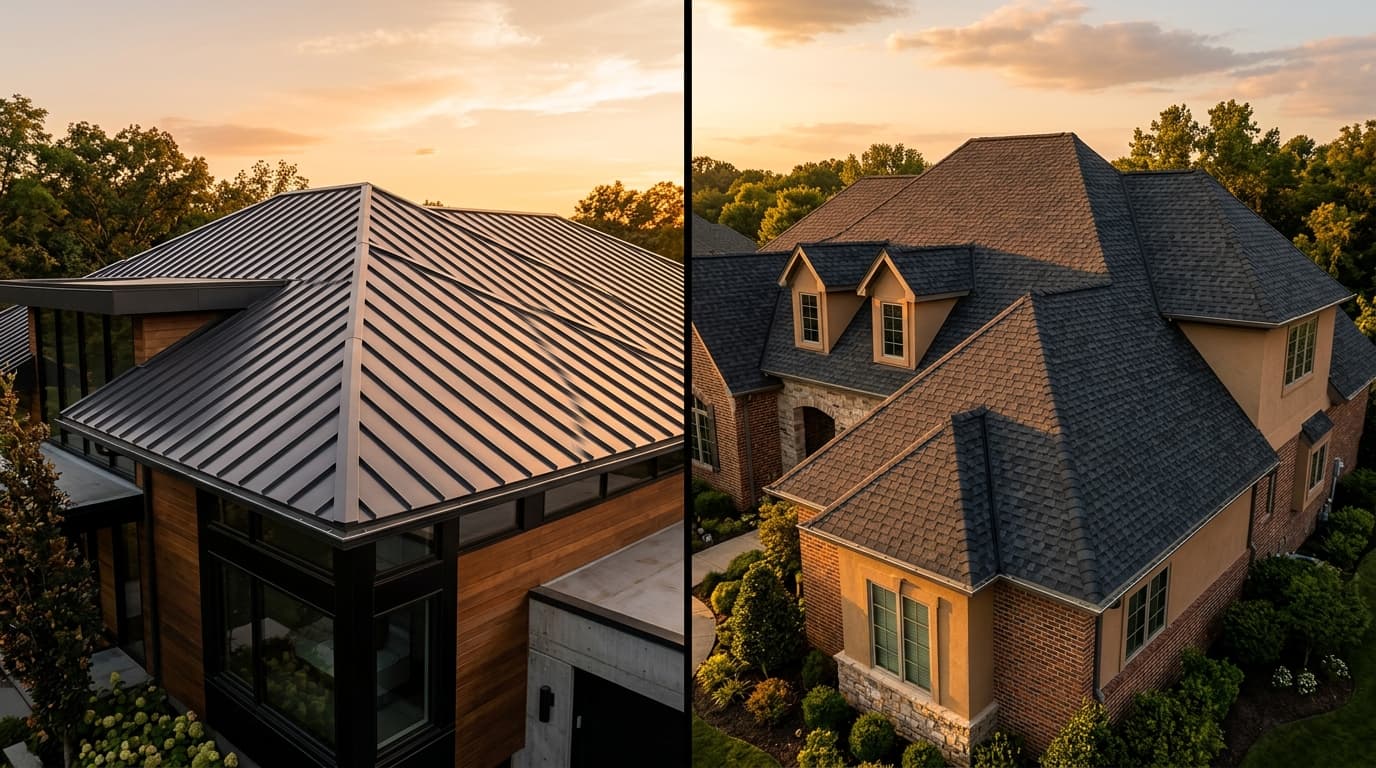
Standing Seam Metal Roof vs. Architectural Shingles: 30-Year Cost & Durability Breakdown
Compare 30-year lifecycle costs, wind ratings, thermal performance, and ROI between standing seam metal and architectural shingles.
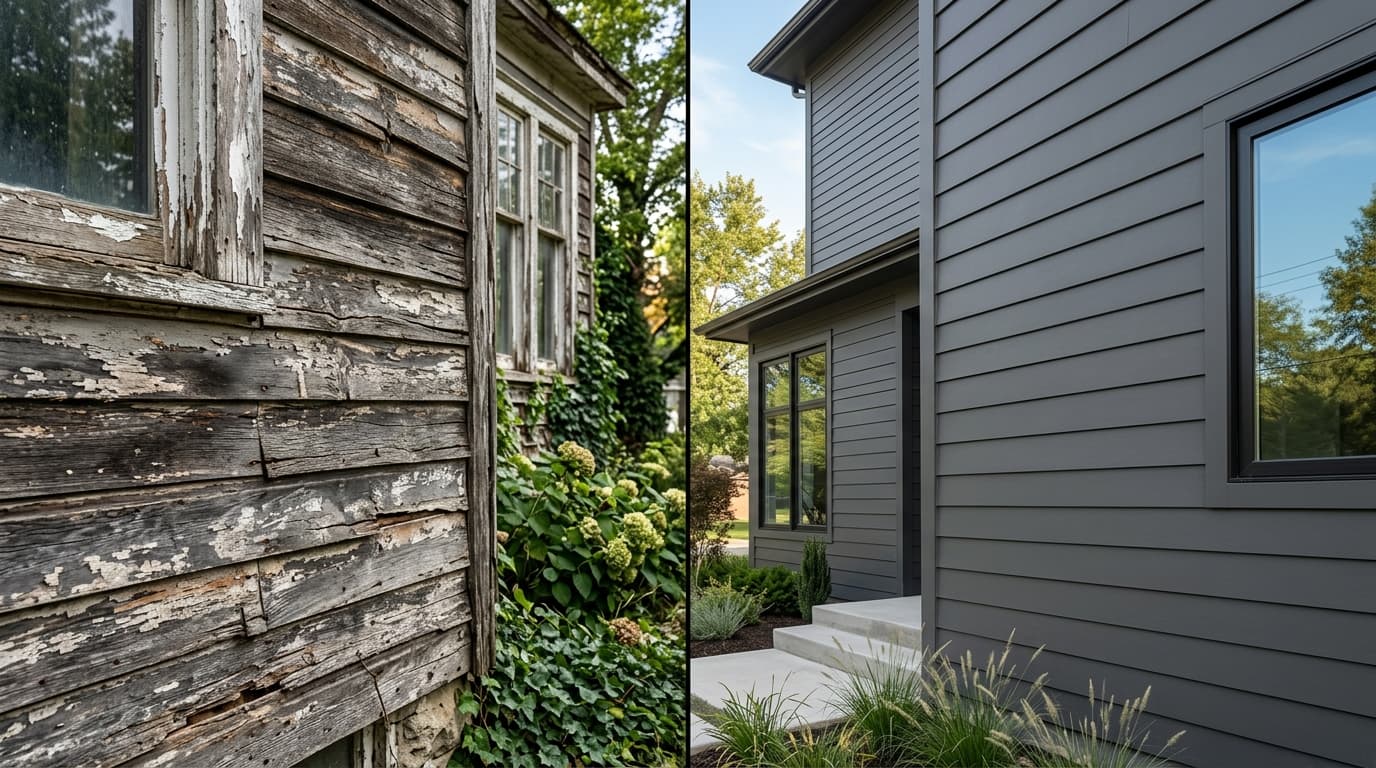
Fiber Cement vs. Engineered Wood vs. Natural Cedar Siding: Exterior Cladding Guide
Comprehensive siding evaluation: James Hardie fiber cement, LP SmartSide engineered wood, and Western Red Cedar. Flame spread, rot resistance, and maintenance.

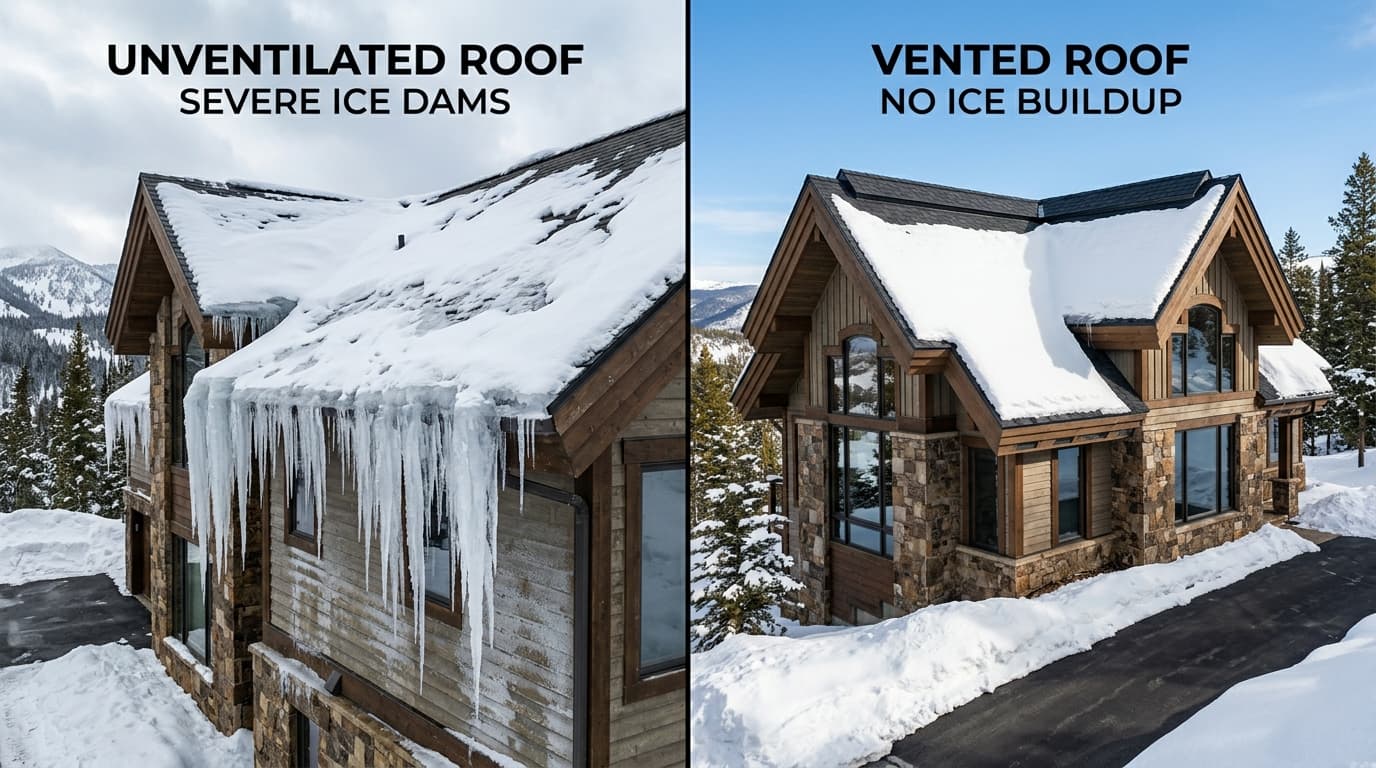
Architectural Roof Ventilation: Balanced Net Free Area, Ridge Vents & Ice Dam Prevention
Building science of roof ventilation: 1:150 vs 1:300 Net Free Area (NFA) rules, baffled ridge vents, continuous soffits, and stopping catastrophic winter ice dams.