Luxury Outdoor Living: 2cm Porcelain Pavers vs. Natural Travertine & Limestone
Compare 2cm (3/4") outdoor porcelain pavers against natural travertine and limestone: freeze-thaw cracking, thermal heat absorption, slip resistance, and sand vs concrete installation.

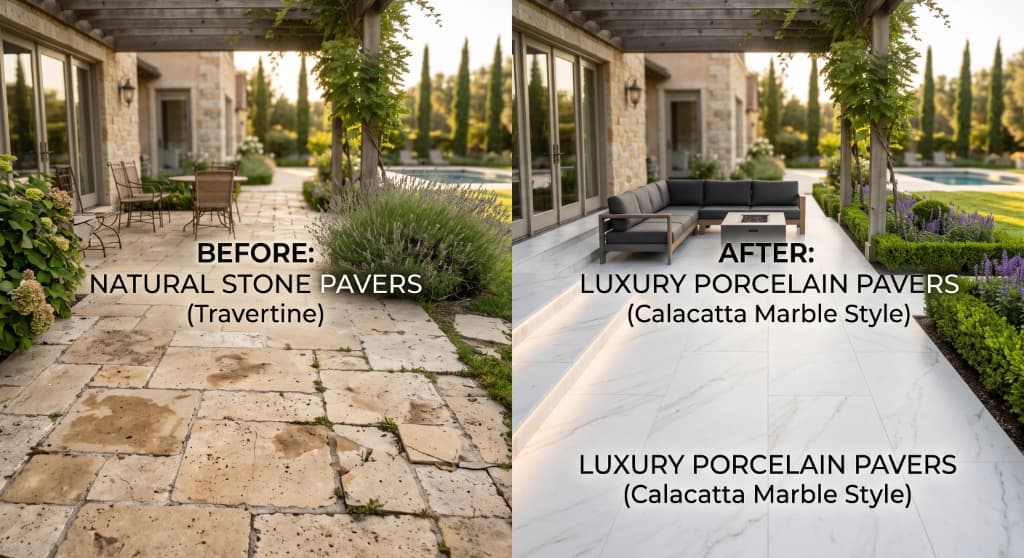
| Engineering & Architectural Metric | 2cm Sintered Porcelain Pavers | Natural Quarried Travertine |
|---|---|---|
| Water Absorption (ASTM C373 / C97) | < 0.05% by weight (Vitrified / Impervious) | 1.50% – 3.00% by weight (Porous / Cellular) |
| Freeze-Thaw Durability | 100% Frost Proof (1,000+ Cycles) | Severe Spalling Risk in Freezing Climates |
| Bare-Foot Summer Heat Performance | Light colors cool; dark colors hot | Naturally cool underfoot in hot desert sun |
| Wet Slip Resistance (DCOF ANSI A326.3) | 0.65 – 0.75 (High Traction R11/R12) | 0.45 – 0.55 (Can be slippery when honed) |
| Saltwater Pool Chemical Immunity | 100% Chemically Inert (Zero erosion) | Erodes rapidly from salt crystal expansion |
| Periodic Sealing Required | Never Required (Zero maintenance) | Mandatory Every 2 to 3 Years |
| Installed Cost (per Sq. Ft.) | $20.00 – $32.00 / sq. ft. | $18.00 – $28.00 / sq. ft. |
Executive Architectural & Engineering Overview: The Al Fresco Living Plane
In contemporary luxury residential architecture, the threshold between interior living spaces and exterior landscapes has dissolved. Through the integration of expansive multi-slide pocketing glass doors, zero-clearance threshold transitions, and open-air covered loggias, outdoor entertaining spaces have evolved into true exterior living rooms. Central to this architectural continuum is the ground plane: the exterior patio, pool surround, and dining terrace.
When specifying high-performance hardscaping for luxury estates, architects and landscape designers navigate a fundamental material dilemma: 2cm (3/4-inch) Architectural Sintered Porcelain Pavers versus Natural Travertine and Limestone. Both materials offer sophisticated, museum-quality aesthetics, but their material physics, moisture absorption mechanics, freeze-thaw behaviors, and multi-decade maintenance demands represent radically different engineering choices:
- 2cm Sintered Porcelain Pavers: An engineered stone manufactured by subjecting natural minerals (kaolin clays, feldspar, silica) to 25,000 kPa of hydraulic compaction followed by thermal firing at 1,200°C (2,192°F). The result is an ultra-dense, non-porous vitrified ceramic slab with an ASTM C373 water absorption rate below 0.1%, delivering total immunity to freeze-thaw cracking, chemical staining, and saltwater corrosion.
- Natural Travertine: A terrestrial sedimentary limestone formed by the rapid chemical precipitation of calcium carbonate around hydrothermal mineral springs. Characterized by its organic cellular voids, earthy cream-and-walnut tonal depth, and remarkable ability to remain cool under bare feet in blistering summer sun, but vulnerable to freeze-thaw spalling, acid etching, and structural settling.
- Structural Substrate Mechanics: Evaluating three distinct installation methodologies: traditional wet-bed mortar setting over reinforced concrete slabs, open-joint permeable gravel sub-bases, and elevated pedestal systems for rooftop terraces and over-membrane decks.
- Slip Resistance & Hydrodynamic Safety: Enforcing Dynamic Coefficient of Friction (DCOF ANSI A326.3) ratings exceeding 0.42 to 0.60 across wet pool copings.
- 30-Year Lifecycle Economics: Calculating raw material costs, specialized wet-diamond cutting labor, and recurring chemical sealing regimens.
An outdoor patio is not an interior tile floor placed outside; it is a horizontal civil engineering structure exposed to mother nature's full thermal fury. Confusing porous sedimentary limestone with vitrified porcelain in a freezing climate guarantees structural spalling within three winters.
By understanding the geological formation, thermal conductivity, and mechanical load ratings of these competing materials, landscape architects and discerning homeowners can specify outdoor living spaces that endure for generations.
---
Material Science & Petrography: Vitrified Porcelain vs. Sedimentary Travertine
The divergence in performance between porcelain pavers and natural stone is dictated by petrographic density and void structure.
+-------------------------------------------------------------------------+
|                  HARDSCAPE MATERIAL SCIENCE COMPARISON                  |
+-------------------------------------------------------------------------+
  1. 2CM SINTERED PORCELAIN PAVER:
     [Kaolin Clay + Feldspar + Silica] ──(1,200°C Fired / Vitrified)
     *Density: 150 lbs/cu.ft. | Water Absorption: <0.05% | 100% Frost Proof*

  2. NATURAL QUARRIED TRAVERTINE:
     [Hydrothermal Calcium Carbonate Precipitation] ──(Sedimentary Evaporite)
     *Density: 130-145 lbs/cu.ft. | Water Absorption: 1.5-3.0% | Freeze-Thaw Sensitive*
+-------------------------------------------------------------------------+
1. 2cm Architectural Sintered Porcelain Pavers
Engineered porcelain pavers are the pinnacle of ceramic materials science:
- Manufacturing Process: High-purity kaolin clays, pulverized feldspars, and quartz sand are blended into a micro-fine slurry, atomized, and compacted under immense hydraulic press pressures exceeding 25,000 to 30,000 kPa (over 4,000 psi). The green body is then fired inside computer-controlled tunnel kilns at temperatures exceeding 1,200°C (2,192°F).
- Vitrification (Glass Phase Transformation): During firing, the feldspar melts into liquid glass that flows through the microscopic voids, fusing the quartz crystals into a monolithic, vitreous matrix.
- Water Absorption (ASTM C373): Porcelain pavers achieve a certified water absorption rate of less than 0.05% by weight (virtually non-porous). Because liquid water cannot penetrate the vitrified body, frost, saltwater, motor oil, barbecue grease, and red wine remain on the surface without staining or causing freeze-thaw damage.
- Breaking Strength (ASTM C648): A standard 2cm (20mm) porcelain paver delivers a breaking strength exceeding 2,000 to 3,000 pounds (9 to 13 kN), capable of supporting heavy vehicular traffic (passenger cars, service trucks) when wet-laid over concrete.
2. Natural Quarried Travertine: Sedimentary Limestones
Travertine is formed in geothermal hot springs when geothermal water supersaturated with calcium bicarbonate reaches the surface:
- Degassing & Carbonate Precipitation: As pressurized hot water surfaces, it releases carbon dioxide gas ($$\\text{CO}_2$$), precipitating dissolved minerals into solid calcite or aragonite crystals ($$\\text{CaCO}_3$$):
$$\text{Ca}^{2+} + 2\text{HCO}_3^- \rightarrow \text{CaCO}_3 \downarrow + \text{CO}_2 \uparrow + \text{H}_2\text{O}$$
- Cellular Void Structure: Escaping carbon dioxide gas bubbles and decomposing organic vegetation become trapped within the mineral beds, creating the distinctive honeycomb voids and cavities characteristic of travertine.
- Water Absorption (ASTM C97): Travertine absorbs between 1.5% and 3.0% water by weight (30 to 60 times more water than porcelain). When water enters these internal cavities in a freezing climate, it expands by 9% upon freezing, exerting immense internal hydraulic pressure that shatters the stone from the inside out (freeze-thaw spalling).
- Chemical Sensitivity: Because travertine is pure calcium carbonate, it reacts immediately with acids. Spilled vinegar, citrus marinade, or acid-wash patio cleaners cause instantaneous chemical etching, dissolving the stone surface into chalky calcium acetate.
---
Thermodynamic Comfort: The Bare-Foot Pool Deck Test
For swimming pool decks and sun-drenched southern terraces, a primary criterion for family comfort is surface temperature under bare feet.
Solar Reflectance & Thermal Conductivity
On a 95°F summer afternoon in Arizona, Florida, or Texas, solar radiation can drive dark hardscape surfaces past 140°F (60°C)—a temperature capable of causing second-degree burns to bare human feet within seconds:
- Natural Light Travertine (The Cool Stone Champion): Light-toned natural travertine (such as Ivory or Walnut) exhibits a remarkably low thermal conductivity ($$\\kappa \approx 1.3 \text{ W/m}\cdot\text{K}$$) combined with a high Solar Reflectance Index (SRI > 60). Furthermore, travertine’s microscopic open porosity acts as a natural thermodynamic buffer, dissipating heat rapidly into the ground. Even in direct 100°F desert sun, light ivory travertine remains comfortable to walk on with bare feet.
- Porcelain Pavers (The Thermal Conductor): Sintered porcelain is dense, vitrified glass-ceramic with a higher thermal conductivity ($$\\kappa \approx 2.2 \text{ W/m}\cdot\text{K}$$). If a homeowner specifies a medium or dark-toned porcelain paver (such as charcoal, slate-gray, or dark wood-grain), the surface absorbs solar energy and superheats, reaching temperatures between 125°F and 145°F in peak afternoon sun.
- Design Rule: For pool surrounds in Southern and Desert regions, light ivory travertine or ultra-light cream/white porcelain pavers are mandatory to preserve bare-foot walking comfort.
+-------------------------------------------------------------------------+
|                  SUMMER BARE-FOOT SURFACE TEMPERATURES                  |
+-------------------------------------------------------------------------+
   AMBIENT AIR TEMP: 95°F (Direct Solar Exposure at 2:00 PM)
     │
     ├──> LIGHT IVORY NATURAL TRAVERTINE:
     │    - Surface Temp: 102°F to 108°F
     │    - Thermal Sensation: Cool and comfortable under bare feet
     │    - Low thermal conductivity + open cellular heat dissipation
     │
     └──> MEDIUM-GRAY PORCELAIN PAVER:
          - Surface Temp: 132°F to 142°F
          - Thermal Sensation: Scalding; impossible to walk on without shoes
          - Dense vitrified glass-ceramic matrix traps and holds heat
+-------------------------------------------------------------------------+
---
Slip Resistance & Hydrodynamic Safety: DCOF Standards (ANSI A326.3)
Pool copings and exterior wet walkways present significant slip-and-fall liability. Architectural specifications must satisfy modern hydrodynamic friction standards.
The ANSI A326.3 Dynamic Coefficient of Friction (DCOF) Standard
Traditional static friction testing (ASTM C1028) was retired due to inaccurate wet measurements. Modern building codes enforce the BOT-3000E digital tribometer test under ANSI A326.3:
- Interior Dry Floors: Minimum DCOF 0.42.
- Exterior Wet Walkways & Patios: Minimum DCOF 0.55.
- Swimming Pool Decks & Sloped Wet Ramps: Minimum DCOF 0.60 to 0.70.
Traction Characteristics Compared:
- 2cm Textured Porcelain Pavers: Factory-engineered with specialized textured, anti-slip surface finishes (designated as R11 or R12 slip ratings under European DIN 51130 standards). Sintered porcelain achieves a wet DCOF rating between 0.65 and 0.75, providing extraordinary grip even when covered in soapy pool water or sunscreen.
- Honed Travertine: Delivers a wet DCOF between 0.45 and 0.55. While natural tumbled travertine provides acceptable grip due to its rough surface pits, smooth-honed travertine becomes deceptively slippery when wet, requiring periodic applications of microscopic chemical traction etch treatments.
---
Installation Methodologies: Wet-Bed vs. Dry-Lay vs. Elevated Pedestals
A primary advantage of 2cm porcelain pavers is their extraordinary versatility across three distinct engineering installation typologies.
+-------------------------------------------------------------------------+
|                  THREE HARDSCAPE INSTALLATION TYPOLOGIES                |
+-------------------------------------------------------------------------+
  1. DRY-LAY PERMEABLE BASE:
     [Paver] ──> [1" Bedding Sand/Gravel] ──> [4-6" Crushed Aggregate Base]
     *Permeable drainage, rapid DIY execution, flexible in freeze-thaw*

  2. MORTAR WET-BED OVER CONCRETE:
     [Paver/Travertine] ──> [Modified Mortar] ──> [4" Reinforced Concrete Slab]
     *Monolithic stability, handles heavy vehicular traffic, zero settling*

  3. ELEVATED PEDESTAL SYSTEM:
     [2cm Porcelain] ──> [Adjustable Screw-Jack Pedestals] ──> [Roof Deck WRB]
     *Self-draining, conceals MEP utilities beneath, lightweight on roofs*
+-------------------------------------------------------------------------+
1. Dry-Lay on Permeable Aggregate Sub-Bases
- Process: Excavate native soil 7 to 9 inches. Compact subgrade to 95% Standard Proctor density. Lay a geotextile separation fabric. Install 4 to 6 inches of compacted crushed stone aggregate (ASTM D2940 dense-graded base), topped with a 1-inch bedding layer of ASTM No. 8 or No. 9 washed angular stone chips.
- Porcelain Advantage: Sintered porcelain pavers can be laid directly onto this gravel bed using plastic cross-spacers (minimum 4mm joint gap) and filled with specialized permeable polymeric sand (such as Alliance Gator Maxx G2).
- Travertine Vulnerability: Laying natural travertine directly on gravel in northern freeze-thaw climates is an invitation to disaster; moisture wicking from the damp base saturates the stone, causing severe winter heave and cracked pavers.
2. Mortar Wet-Bed Over Reinforced Concrete Slabs
- Process: Pour a 4-inch structural concrete slab reinforced with #4 rebar or welded wire mesh over a compacted gravel sub-base. Slope the slab at a minimum 1/4" per foot (2%) away from the home.
- Setting Mortar: Apply an ANSI A118.15 super-polymer modified thin-set mortar using a 1/2" x 1/2" square-notch trowel.
- Mandatory Bonding Slurry for Porcelain: Because 2cm porcelain has zero porosity, standard mortar will not bond mechanically. Installers must apply a bonding slurry coat (such as MAPEI Granirapid or Ardex X77 mixed with latex additive) to the back of each porcelain paver before embedding it into the wet bed.
- Travertine Mortar Setting: Travertine must be set in white thin-set mortar (gray mortar stains through the light stone). The installer must choose between leaving the natural surface holes open ("Unfilled") or filling the voids flush with polymer-modified cementitious grout ("Filled and Honed").
3. Elevated Pedestal Systems for Rooftop Terraces
For rooftop terraces, plaza decks, and balconies built over living spaces:
- 2cm porcelain pavers are placed onto adjustable polypropylene screw-jack pedestals (such as Bison Innovative Products or Buzon).
- The pavers rest un-adhered on the pedestal heads with integrated spacer tabs.
- Advantages: Rainwater drops immediately through the open 3mm tile joints onto the waterproof roof membrane below and flows to scupper drains. The space beneath conceals electrical conduit, low-voltage landscape lighting wires, and irrigation lines while allowing individual pavers to be lifted for roof membrane inspection.
- *Travertine Prohibition*: Natural travertine cannot be used on pedestal systems because natural stone lacks the certified flexural tensile breaking strength to span open air gaps safely without a continuous structural subfloor.
---
30-Year Comprehensive Lifecycle Cost & Maintenance Analysis
Evaluating the financial commitment between natural stone and porcelain pavers requires examining initial material acquisition, diamond cutting labor, and multi-year chemical maintenance.
30-Year Capital Expenditure Model (1,500 Sq. Ft. Patio Hardscape)
| Financial & Maintenance Metric | 2cm Sintered Porcelain Pavers | Premium Natural Tumbled Travertine | |---|---|---| | Raw Material Cost (per Sq. Ft.) | $9.00 – $14.00 | $6.50 – $11.00 | | Excavation & Base Preparation | $5.00 – $7.00 | $5.00 – $7.00 | | Specialized Installation Labor | $9.00 – $14.00 (Wet diamond cutting) | $8.00 – $12.00 (Soft stone setting) | | Total Initial Installation (Year 0) | $34,500 ($23.00 / sq. ft.) | $30,750 ($20.50 / sq. ft.) | | Year 5: Power Washing & Chemical Sealing | $300 (Simple pressure wash only) | $2,200 (Deep acid-free wash + impregnating sealer) | | Year 10: Re-Sealing & Void Re-Filling | $300 (Pressure wash) | $2,800 (Re-fill collapsed voids + solvent seal) | | Year 15: Freeze-Thaw Tile Replacement | $0 (Zero spalled pavers) | $4,500 (Replace 15-20 cracked/spalled stones) | | Year 20: Re-Sealing & Base Leveling | $300 (Pressure wash) | $3,200 (Full chemical seal & re-level settling) | | Year 25: Mid-Life Renovation | $300 (Pressure wash) | $3,800 (Re-staining & joint repointing) | | Net 30-Year Capital Expenditure | $36,000 | $47,250 | | Maintenance Burden | Ultra-Low (Pressure wash with water) | High (Chemical sealing every 2 to 3 years) |
---
Forensic Failure Analysis: Five Critical Hardscaping Defects
Forensic hardscape consultants routinely investigate catastrophic outdoor failures resulting from material mismatches.
1. Winter Freeze-Thaw Travertine Spalling
- Physical Manifestation: In northern states, travertine patio pavers flaking apart in thin layers, crumbling into gravel, and breaking off at edges after their second winter.
- Root Forensic Cause: Porous travertine (water absorption >2.0%) absorbed autumn rainwater into its honeycomb cavities. When the temperature dropped below 32°F, the trapped water expanded by 9%, exerting thousands of pounds of internal hydraulic pressure that fractured the stone.
- Mandatory Preventative Engineering: In ASHRAE Climate Zones 4 through 8 (freezing climates), specify exclusively 2cm sintered porcelain pavers (ASTM C373 absorption <0.05%); reserve travertine strictly for freeze-free southern zones.
2. Saltwater Pool Erosion (Salt Spalling)
- Physical Manifestation: Travertine pool coping stones dissolving and pitting into deep jagged craters along the water's edge on a saltwater pool.
- Root Forensic Cause: Saltwater pool water splashes onto the porous travertine. As the water evaporates in the sun, salt crystals form inside the pores of the stone. The growing salt crystals exert immense sub-surface pressure (sub-florescence), crumbling the soft calcium carbonate.
- Mandatory Preventative Engineering: Specify non-porous 2cm porcelain pavers with factory bullnose coping profiles for all saltwater pools; porcelain is completely impervious to salt attack.
3. Barbecue Grease & Red Wine Permanent Staining
- Physical Manifestation: Dark, greasy black stains around the outdoor grill station and purple wine spots on travertine that cannot be removed by power washing.
- Root Forensic Cause: Travertine’s open capillary pores absorbed animal fats and organic tannins deep into the stone matrix.
- Mandatory Preventative Engineering: Porcelain pavers are non-porous and wipe clean with simple water; unsealed travertine must be protected with fluorochemical oleophobic penetrating impregnating sealers.
4. Porcelain Debonding on Wet-Bed Concrete (Hollow Pavers)
- Physical Manifestation: Porcelain pavers on a concrete patio sounding hollow when walked on, eventually popping loose from the mortar bed.
- Root Forensic Cause: The tile setter used standard dry thin-set without applying a liquid latex bonding slurry to the back of the porcelain. Because porcelain has zero absorption, mortar cannot mechanical-anchor to the tile without a chemical bonding agent.
- Mandatory Preventative Engineering: Strictly mandate an ANSI A118.15 super-polymer modified thin-set combined with a wet slurry coat applied directly to the back of each paver.
5. Polymeric Sand Washout & Joint Weeds
- Physical Manifestation: Polymeric sand washing out of paver joints during heavy rainstorms, leaving wide gaps filled with ant hills and sprouting weeds within 12 months.
- Root Forensic Cause: The installer used standard coarse polymeric sand in narrow 4mm porcelain paver joints, or failed to activate the polymer with fine water misting.
- Mandatory Preventative Engineering: Use specialized fine-aggregate polymeric sand engineered for narrow porcelain joints (such as Gator Maxx G2); ensure full-depth compaction with vibrating rubber-mat compactors.
---
Real-World Architectural Case Studies
Case Study 1: The Oceanfront Saltwater Pool Terrace — Palm Beach, Florida
- Architectural Scope: Complete hardscape installation for a 2,800 sq. ft. pool terrace and outdoor kitchen on a direct oceanfront luxury estate.
- Engineering Dilemma: The client originally installed classic honed travertine. Within 4 years, the combination of ocean sea-spray, chlorine from the pool, and intense sun etched the stone, while barbecue grease permanently ruined the dining zone.
- Applied Solutions:
- *Material Upgrade*: Specified 2cm Mirage Outdoor Porcelain Pavers in an ultra-light Travertine-Vein architectural pattern.
- *Bare-Foot Thermal Metrology*: The ultra-light cream color delivered an SRI rating of 78, keeping the porcelain surface temperature at a comfortable 104°F even in direct 92°F Florida sun.
- *Zero Maintenance*: Saltwater splashes and barbecue oils wiped clean with a garden hose; zero chemical sealing was required.
- Financial Tally: Total Project Expenditure: $68,000; Total Maintenance Cost over 6 Years: $0.
Case Study 2: The Chicago Lakefront Suburban Freeze Terrace — Winnetka, Illinois
- Architectural Scope: Designing an expansive 1,800 sq. ft. outdoor terrace with a built-in gas fire pit and outdoor kitchen facing Lake Michigan.
- Engineering Dilemma: Winter temperatures plummet to -15°F with heavy snow drifts and lake-effect freeze-thaw cycles that destroy soft stone.
- Applied Solutions:
- *Material Specification*: Specified 2cm Sintered Porcelain Pavers (Stone-Look Chiseled Edge) certified for over 1,000 freeze-thaw cycles (ASTM C1026).
- *Permeable Base Engineering*: Installed over an engineered 8-inch open-graded permeable stone aggregate base (ASTM No. 57 and No. 8 stone), allowing melted snow to drain immediately through the joints into the earth without freezing beneath the pavers.
- *Performance*: Zero spalling, zero cracking, and zero frost heave observed after four severe Midwestern winters.
- Financial Tally: Total Project Expenditure: $42,500; Total Net Savings vs. Travertine Maintenance: $11,500.
---
Architectural Specification Guide: Master Division Standards
When specifying exterior hardscaping for luxury residential projects, architects enforce MasterFormat Division 32 standards:
Division 32 14 00 — Unit Paving (Porcelain & Natural Stone)
- Porcelain Paver Specification: 20mm (2cm) structural vitrified porcelain pavers conforming to ASTM C373 (water absorption < 0.05%), ASTM C648 (breaking strength > 2,000 lbs), and ASTM C1026 (freeze-thaw resistance, zero damage over 300 cycles).
- Slip Resistance Rating: Minimum wet Dynamic Coefficient of Friction (DCOF) rating of 0.55 per ANSI A326.3 for exterior walkways; 0.65 for pool surrounds.
- Travertine Specification: Natural Travertine Dimension Stone conforming to ASTM C1527 (Standard Specification for Travertine Dimension Stone, Class I Exterior). Minimum compressive strength: 7,500 psi per ASTM C170.
- Mortar Setting: ANSI A118.15 super-polymer modified dry-set mortar applied over structural reinforced concrete slabs.
---
General Contractor & Hardscape Trade Vetting Guide
To ensure your luxury hardscape installation survives decades without settling or cracking, apply strict vetting standards:
Trade Vetting Checklist
- ICPI / NCMA Certified Concrete Paver Installer: Verify that the hardscape contractor employs crews certified through the Interlocking Concrete Pavement Institute (ICPI). Certified installers understand soil compaction, geotextile separation, and aggregate base grading.
- Dedicated Wet-Cut Diamond Bridge Saws on Site: Ask: "What equipment do your mechanics use to cut 2cm porcelain pavers?" Porcelain has a Mohs hardness of 8; cutting it requires continuous water-cooled diamond bridge saws with specialized porcelain blades. If a contractor attempts to cut porcelain dry with a hand grinder, the edges will chip and shatter.
- Written Base Warranty: Require a minimum 5-year warranty against frost heave, settling, and paver shifting in the written contract.
---
Frequently Asked Questions (Technical & Climate)
1. Does natural travertine crack in winter freezing climates?
Yes. Travertine is a sedimentary stone containing thousands of natural cellular voids and air pockets. Because travertine absorbs between 1.5% and 3.0% water, autumn rain penetrates deep into the stone. When the ground freezes, this trapped water expands by 9%, exerting immense internal hydraulic pressure that shatters the stone layers apart (freeze-thaw spalling). In freezing climate zones, natural travertine is an inappropriate exterior hardscape material.
2. Can 2cm porcelain pavers support the weight of a car on a driveway?
Yes, but only if they are wet-laid with modified mortar over a structural reinforced concrete slab. When installed over a 4-inch concrete slab with 100% thin-set mortar coverage, 2cm porcelain pavers deliver an ultimate compressive breaking strength exceeding 30,000 psi, capable of supporting heavy pickup trucks and SUVs without cracking. However, for dry-laid permeable gravel applications, porcelain pavers should be restricted to pedestrian walkways, patios, and pool decks.
3. Are porcelain pavers too hot to walk on with bare feet around a swimming pool?
It depends entirely on the color you select. Sintered porcelain is dense and conducts heat efficiently. If you choose a dark gray, charcoal, or dark wood-grain porcelain paver, it will become hot (135°F+) in direct summer sun. However, if you specify an ultra-light cream, ivory, or white porcelain paver, its high Solar Reflectance Index (SRI > 70) reflects solar heat, keeping the surface completely comfortable under bare feet.
4. Do porcelain pavers require regular sealing?
No. Unlike natural travertine, limestone, and granite—which require penetrating chemical sealers every 2 to 3 years to prevent staining—2cm porcelain pavers have a water absorption rate under 0.05% and are non-porous. Motor oil, red wine, barbecue grease, chlorine, and pool acid cannot penetrate the vitrified surface. Porcelain pavers require zero chemical sealers for their entire lifespan; cleaning involves simple washing with water or a mild garden hose pressure wash.
5. Why do contractors charge more labor to install porcelain pavers than natural stone?
Because 2cm sintered porcelain has a Mohs hardness of 8, it is exceptionally difficult to cut and fabricate. Hardscape mechanics cannot cut porcelain with standard stone blades or hand-split it with chisels. Every cut requires heavy, specialized continuous water-cooled diamond bridge saws with specialized thin-kerf porcelain blades traveling at slow feeds. Furthermore, laying porcelain requires precision laser leveling because rigid porcelain tiles have zero flexural forgiveness over uneven sub-bases.
6. Can I use polymeric sand between porcelain pavers?
Yes, but you must use specialized polymeric sand engineered specifically for porcelain pavers (such as Alliance Gator Maxx G2 or Sakrete Polymeric Paver Sand). Because porcelain pavers feature crisp, rectified 90-degree edges with narrow joint widths (typically 3/16 inch or 4mm), the polymeric sand must contain ultra-fine angular quartz grains that flow easily into tight joints and activate with fine water misting without leaving a polymer haze on the textured tile face.
7. What is an elevated pedestal paver system and when is it used?
An elevated pedestal system uses adjustable high-density polypropylene screw-jack pedestals resting directly on a waterproof roof membrane or sloped concrete deck. 2cm porcelain pavers sit loose on top of the pedestal heads with integrated spacer tabs. This system creates an elevated, perfectly level walking deck while allowing rainwater to drain instantly through the open joints to the roof membrane below. It is the premier architectural method for luxury rooftop terraces, penthouse decks, and second-story walk-out balconies.
Frequently Asked Questions
Written by Julian Vance
Senior Architectural Designer & Principal EditorJulian holds a Master of Architecture (M.Arch) and brings over 14 years of experience specializing in luxury residential additions, historic preservation, and bespoke cabinetry ergonomics. He oversees architectural integrity and design analysis at Estatique.
Related Research in Roofing & Exteriors
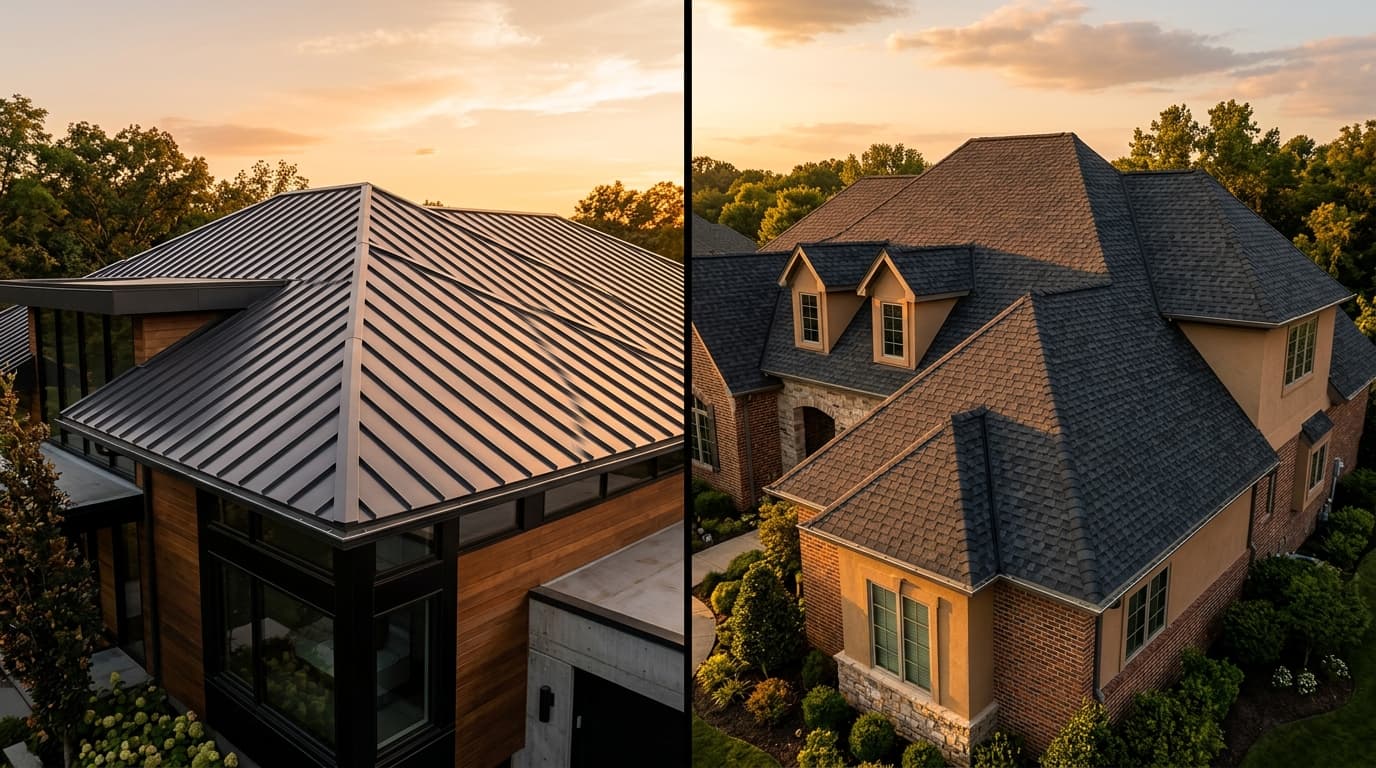
Standing Seam Metal Roof vs. Architectural Shingles: 30-Year Cost & Durability Breakdown
Compare 30-year lifecycle costs, wind ratings, thermal performance, and ROI between standing seam metal and architectural shingles.

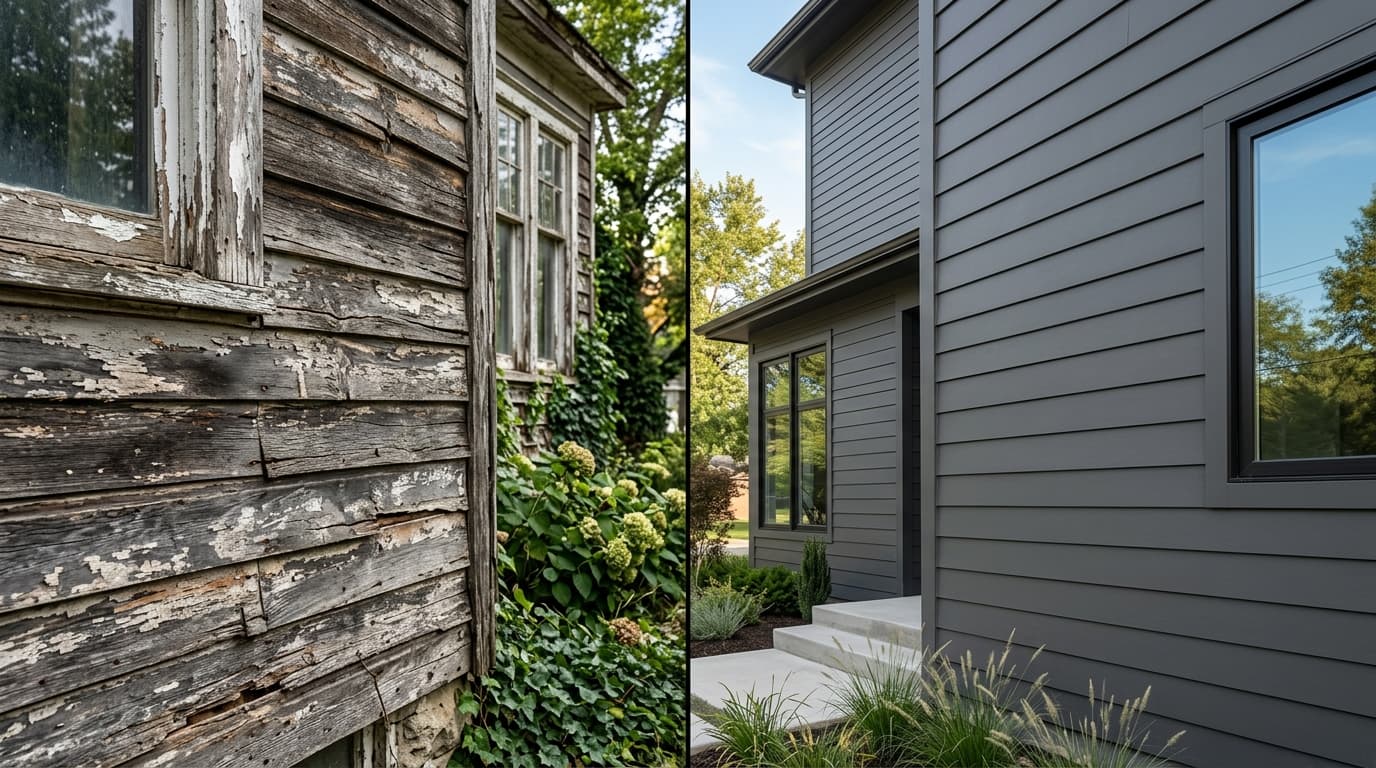
Fiber Cement vs. Engineered Wood vs. Natural Cedar Siding: Exterior Cladding Guide
Comprehensive siding evaluation: James Hardie fiber cement, LP SmartSide engineered wood, and Western Red Cedar. Flame spread, rot resistance, and maintenance.

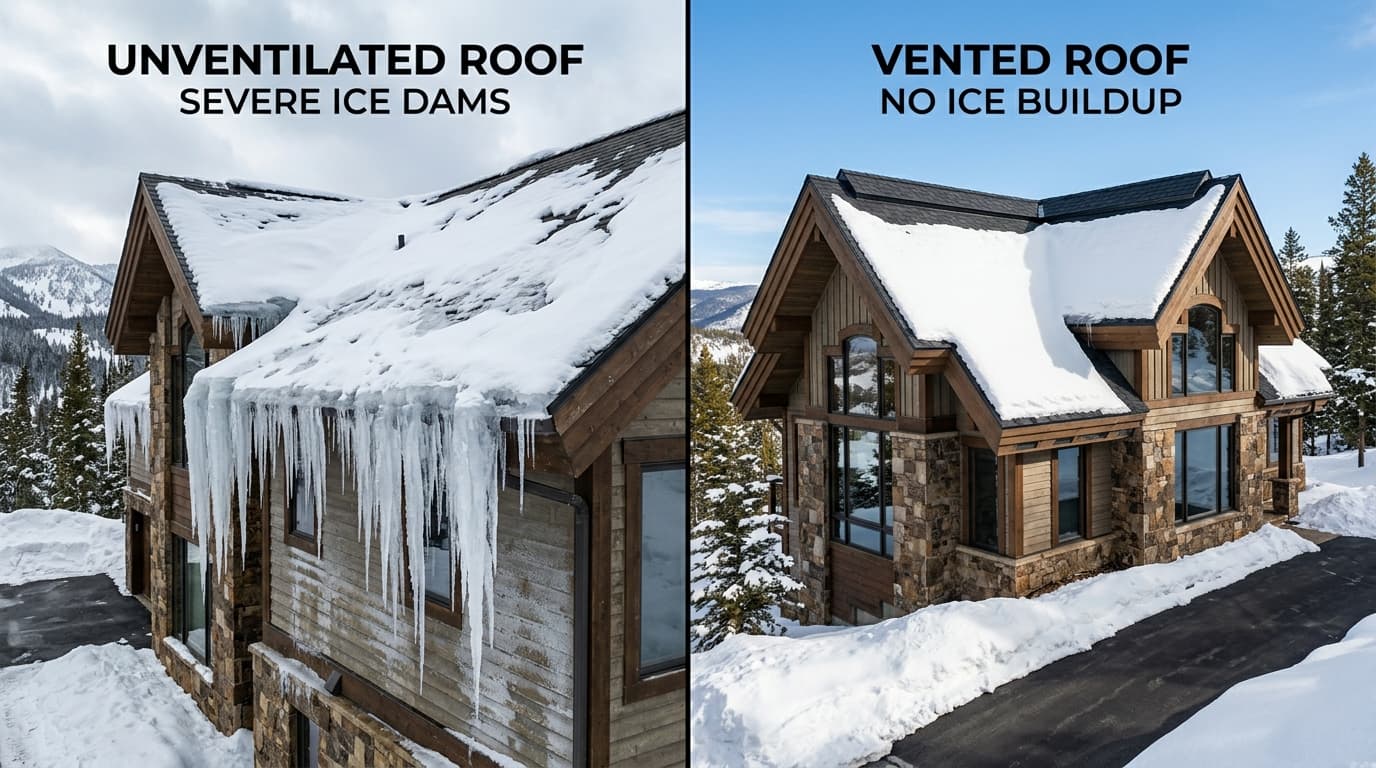
Architectural Roof Ventilation: Balanced Net Free Area, Ridge Vents & Ice Dam Prevention
Building science of roof ventilation: 1:150 vs 1:300 Net Free Area (NFA) rules, baffled ridge vents, continuous soffits, and stopping catastrophic winter ice dams.