Architectural Lighting Design: Kelvin Color Temperature, 95+ CRI & Layered Illumination
Master luxury residential lighting design: 2700K vs 3000K Kelvin, Color Rendering Index (CRI 95+), glare mitigation, and task-ambient-accent layering.

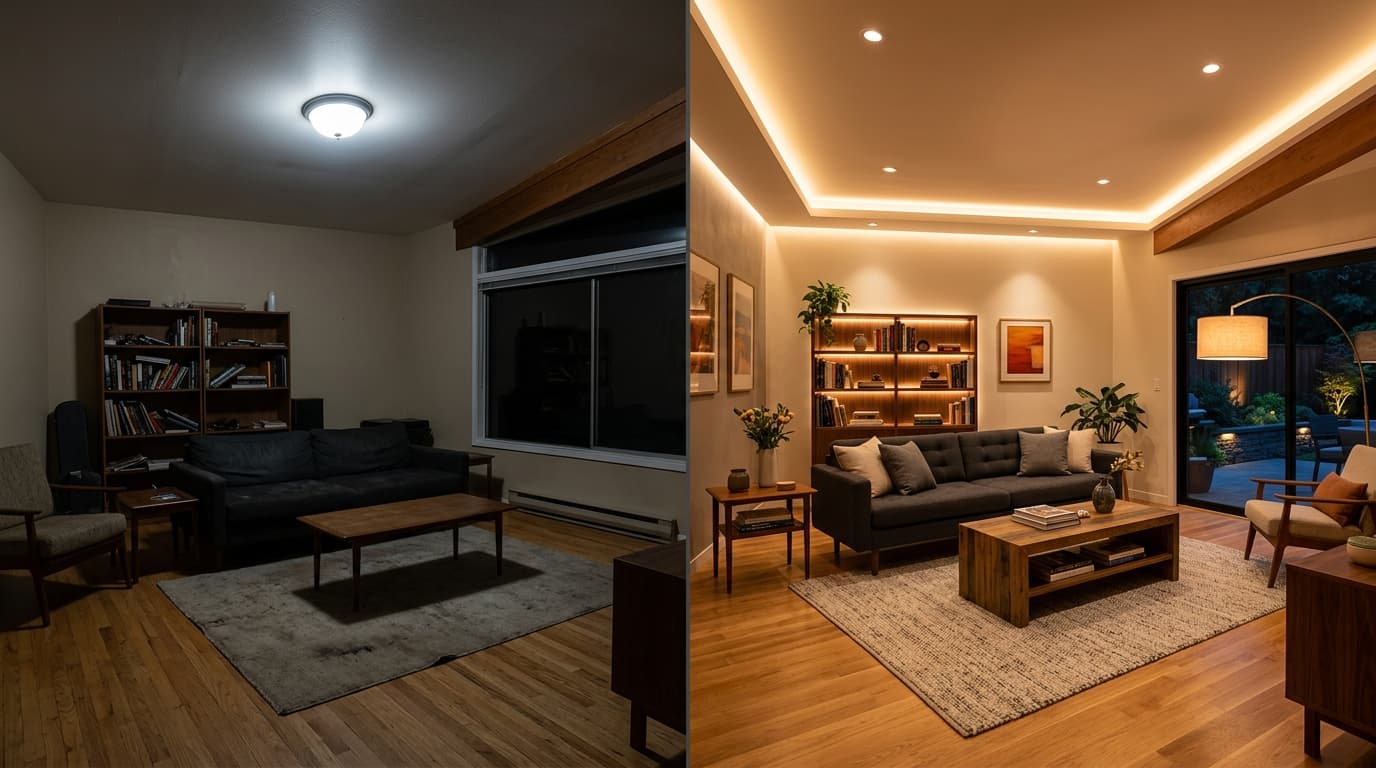
1. Executive Brief: The Photometric Revolution in Luxury Residential Architecture
In high-end residential architecture, lighting design has transcended its historical role as a simple utilitarian requirement to become one of the most powerful spatial, emotional, and physiological drivers of the built environment. In the contemporary luxury home, illumination is not measured merely in raw foot-candles or fixture quantity; it is engineered through the precise calibration of photometric physics, spectral power distributions, optical glare control, and circadian biology.
Historically, residential lighting relied on inefficient incandescent and halogen sources. While these legacy emitters exhibited poor energy efficiency and high heat output, they possessed a continuous, natural blackbody radiation spectrum with a perfect Color Rendering Index ($R_a = 100$) and a natural "warm dimming" curve. The initial wave of commercial solid-state LED lighting introduced severe optical compromises: fragmented spectral outputs, spiked blue-wavelength emissions, poor color fidelity, visible stroboscopic flicker, and erratic phase-dimming performance.
+----------------------------------------------------------------------------------------------------+
|                         THE SPECTRUM OF ARCHITECTURAL ILLUMINATION                                 |
+-------------------+--------------------+--------------------+--------------------+-----------------+
| 1. Spectral Power | 2. Optical Beam    | 3. Layered Spatial | 4. Dimming & Drive | 5. Circadian &  |
| Distribution (CRI)| Control & Glare    | Composition (4 Lyr)| Architecture (ELV) | Biological Lux  |
+-------------------+--------------------+--------------------+--------------------+-----------------+
| 95+ CRI / 90+ R9; | 15°- 60° precision | Ambient, Task,     | Reverse-phase ELV, | Dynamic Kelvin  |
| TM-30 Fidelity Rf | TIR optics; 45° cut| Accent (3:1 ratio),| 0-10V, & DALI-2;   | tuning (1800K to|
| & Gamut Rg score. | off visual comfort.| & Decorative cove. | 0.1% smooth dimming| 4000K daylight).|
+-------------------+--------------------+--------------------+--------------------+-----------------+
In 2026, architectural illumination is governed by advanced metrics that supersede blunt Kelvin ratings. Discerning homeowners and architects design around TM-30-18 color vector graphics, R9 saturated red fidelity, melanopic lux calculations, and flangeless architectural apertures that conceal the light source while celebrating the illuminated planes.
---
2. Photometric Physics & Color Science: Kelvin, CRI & TM-30-18
To design lighting that reveals the true depth of Calacatta marble, rich walnut millwork, and human skin tones, one must master the physical metrics governing light quality:
                  PHOTOMETRIC METRIC TAXONOMY & TARGET BENCHMARKS
   Metric / Parameter    Physical Definition                          Architectural Benchmark
   ----------------------------------------------------------------------------------------------------
   CCT (Kelvin)          Correlated Color Temperature: absolute       2700K (Warm Residential),
                         temperature of an ideal blackbody radiator   3000K (Modern Contemporary),
                                                                      1800K - 3000K (Dim-to-Warm)
   CRI ($R_a$)           Color Rendering Index: average fidelity of   CRI >= 95 (High-Fidelity Standard;
                         8 pastel reference color swatches (R1-R8)    never specify CRI < 90)
   $R_9$ Value           Specific spectral rendering index for        $R_9 \ge 80$ (Mandatory for warm
                         deep, saturated red tones                    woods, leather, and skin tones)
   TM-30 $R_f$           IES TM-30 Fidelity Index: evaluates 99       $R_f \ge 92$ (Accurate color rendition
                         statistically representative color samples   across full visual spectrum)
   TM-30 $R_g$           IES TM-30 Gamut Index: evaluates color       $R_g$ between 98 and 104 (Neither
                         saturation and vividness                     washed out nor unnaturally oversaturated)
Correlated Color Temperature (CCT) & the Human Eye
Color temperature is measured in Kelvin (K). In residential environments:
- 1800K – 2200K (Candlelight / Sunset Glow): High in long-wavelength amber/red; suppresses melanopsin activation, promoting melatonin release for evening relaxation.
- 2700K (Soft White / Incandescent Replica): The traditional North American residential benchmark. Optimal for traditional architecture, warm wood paneling, and intimate living spaces.
- 3000K (Warm White / Architectural Contemporary): The gold standard for modern, transitional, and minimalist architecture. Renders crisp whites, quartzites, and cool metals (chrome, brass) without the yellow dinginess of 2700K or the commercial sterility of 4000K.
- 4000K – 5000K (Daylight / Cool Utility): Restricted to functional utility garages, commercial display cases, or daytime circadian entrainment cycles. When deployed in residential living spaces, it creates a harsh, institutional ambiance.
+----------------------------------------------------------------------------------------------------+
|                         THE COLOR TEMPERATURE (KELVIN) SPECTRUM                                    |
+---------------------+-----------------------+-----------------------+------------------------------+
| 1800K - 2200K       | 2700K                 | 3000K                 | 4000K - 5000K                |
| Sunset Glow / Candle| Soft Warm Incandescent| Modern Architectural  | Commercial Daylight          |
+---------------------+-----------------------+-----------------------+------------------------------+
| Evening dining,     | Traditional living,   | Modern living rooms,  | Garages, task craft rooms,   |
| bedside reading,    | bedrooms, intimate    | kitchens, marble baths| commercial offices (Avoid in |
| cozy fireplace mood.| dining rooms.         | and gallery spaces.   | residential living areas).   |
+---------------------+-----------------------+-----------------------+------------------------------+
The Critical $R_9$ Metric: Why Standard CRI Fails
The traditional CIE Color Rendering Index ($R_a$) developed in 1965 measures an average of eight pastel color samples ($R_1$ through $R_8$). Notably, standard CRI completely omits $R_9$ (saturated red).
A builder-grade LED downlight can advertise a "high" CRI of 90, yet have an $R_9$ score of less than 10. When installed in a luxury home, this deficiency causes butcher-block countertops, exotic red-toned hardwood floors, red artwork, and human skin complexions to look dull, grey, and sickly. Premium architectural LED engines (such as Xicato, Soraa, Nichia, or Ketra) maintain an $R_9$ rating of 80 to 95, ensuring vibrant, true-to-life red spectral reproduction.
       SPECTRAL COLOR FIDELITY COMPARISON: BUILDER LED VS. ARCHITECTURAL LED
   Color Metric          Builder-Grade "90 CRI" LED         Architectural Luxury Engine (95+ CRI)
   ----------------------------------------------------------------------------------------------------
   CRI ($R_a$)           90                                 97
   $R_9$ (Saturated Red) 12  <-- Extreme Red Deficiency!    92  <-- Saturated Red Vibrancy
   TM-30 $R_f$           82                                 94
   TM-30 $R_g$           93                                 101
   Skin Tone Rendition   Pale, greenish-yellow undertones   Warm, natural, blood-perfusion vitality
---
3. The 4 Layers of Architectural Illumination
A single overhead grid of downlights—frequently referred to by architects as a "ceiling Swiss cheese catastrophe"—creates flat, uninviting, high-glare environments. Masterful lighting design builds depth through The 4 Layers of Illumination.
+----------------------------------------------------------------------------------------------------+
|                         THE 4-LAYER RESIDENTIAL LIGHTING FRAMEWORK                                 |
+-------------------+--------------------+--------------------+--------------------------------------+
| Layer Type        | Primary Function   | Typical Fixture Types    | Key Design Rule & Contrast Ratio |
+-------------------+--------------------+--------------------+--------------------------------------+
| 1. Ambient        | General navigation,| Indirect LED cove, | Low brightness baseline; provides    |
| (Foundational)    | visual safety      | wall wash, diffuse | 5 - 15 foot-candles of diffuse light.|
+-------------------+--------------------+--------------------+--------------------------------------+
| 2. Task           | High-lumen work for| Under-cabinet tape,| Focused illumination; 30 - 60 foot-  |
| (Functional)      | reading & cooking  | architectural drop | candles directed onto work plane.    |
+-------------------+--------------------+--------------------+--------------------------------------+
| 3. Accent         | Draws eye to art & | Adjustable recessed| 3:1 to 5:1 contrast ratio over       |
| (Focal/Drama)     | architectural forms| pinholes, monopoints| surrounding ambient light levels.    |
+-------------------+--------------------+--------------------+--------------------------------------+
| 4. Decorative     | Visual "jewelry" & | Statement chandelier| Visual focal point; dimmed to low    |
| (Aesthetic)       | sculptural form    | sconces, art glass | brightness so it doesn't cause glare.|
+-------------------+--------------------+--------------------+--------------------------------------+
1. Ambient Illumination Layer
Ambient light establishes the general visual baseline of the room. Rather than blasting light downward onto the floor, sophisticated ambient lighting illuminates the vertical surfaces (walls) and horizontal ceiling plane.
- The Physics of Perception: The human eye perceives room brightness by the luminance of vertical planes, not horizontal floors. Washing a wall with light makes a room feel larger and more open than downlighting the center of the rug.
- Execution: Concealed LED coves directing light across a vaulted ceiling, or continuous linear grazing fixtures (grazing textured Venetian plaster or stone).
2. Task Illumination Layer
Task lighting delivers shadow-free, high-intensity illumination to specific operational surfaces: kitchen countertops, bathroom grooming mirrors, desk surfaces, and reading nooks.
- Kitchen Countertops: Must be lit from continuous under-cabinet linear LED extrusions mounted near the front edge of the upper cabinet, angled back toward the wall. Mounting tape at the rear creates severe glare on backsplashes and leaves the work area in shadow.
- Bathroom Vanity Grooming: Overhead downlights directly above a vanity sink cast unflattering vertical shadows under eyebrows, nose, and chin ("monster lighting"). Task lighting must be delivered from vertical wall sconces positioned at eye level (60 to 66 inches above finished floor) on either side of the mirror, cross-illuminating the face with diffuse, high-CRI light.
3. Accent Illumination & Contrast Ratios
Accent lighting creates spatial drama by illuminating artwork, architectural fireplaces, floral arrangements, or wine displays.
- The 3:1 Rule: To create noticeable visual prominence, an accent beam must deliver an illuminance level three times higher (3:1 contrast ratio) than the surrounding ambient background.
- The 30-Degree Artwork Angle: When illuminating wall-mounted artwork with an adjustable recessed downlight, the fixture must be positioned so that the center of the beam hits the artwork at an angle of 30 degrees from the vertical. If the angle is less than 30 degrees (fixture too close to wall), harsh frame shadows are cast downward; if the angle is greater than 30 degrees (fixture too far out), annoying specular glare reflects directly into the viewer's eyes.
$$\text{Distance from Wall } (D) = \text{Ceiling-to-Art Height } (H) \times \tan(30^\circ) \approx H \times 0.577$$
---
4. Fixture Architecture: Aperture Scale, Optics & Glare Shielding
The hallmark of luxury architectural lighting is the complete concealment of the light source. You should see the effect of the light, never the fixture itself.
                  ARCHITECTURAL FIXTURE SPECTRUM COMPARISON
   Fixture Parameter    Builder-Grade Downlight (6-inch)     Architectural Precision Pin-Hole (2-inch)
   ----------------------------------------------------------------------------------------------------
   Aperture Diameter    6.0 inches (Large visual footprint)  1.75 to 2.5 inches (Discrete, elegant)
   Ceiling Trim Profile Surface-mount stamped metal flange   Trimless / Flangeless (Plaster mud-in kit)
   Optical Beam Control Cheap plastic diffuse acrylic lens   Total Internal Reflection (TIR) glass optic
   Visual Cut-Off Angle 10° - 15° (High direct glare/hotspot) 40° - 50° Deep regressed comfort cut-off
   Aperture Finishes    White painted plastic ring           Solite stipple lens, black hex-cell louver,
                                                             micro-prismatic glare reduction optic
The Science of Visual Cut-Off Angle
The Visual Cut-Off Angle is the angle from the horizontal ceiling plane below which the light source (LED diode) is completely invisible to the human eye.
- Cheap builder downlights have a cut-off angle of 10° to 15°, meaning the bare, blinding LED emitter is visible from almost anywhere in the room, causing severe eye fatigue and glare.
- Premium architectural fixtures (such as Lucifer Lighting, USAI, DMF, or Visual Comfort Architectural) provide a deep regressed 45° to 50° cut-off angle. As you walk through the room, the ceiling appears completely dark and quiet, while the floors, art, and furniture glow with illumination.
---
5. Dimming Protocols & Low-Voltage Control Infrastructure
Nothing ruins a luxury lighting installation faster than incompatible dimming components. LED dimming is an electrical engineering science that requires matching the LED driver protocol to the home automation control system.
+----------------------------------------------------------------------------------------------------+
|                         LED DIMMING PROTOCOL ARCHITECTURAL COMPARISON                              |
+-------------------+--------------------+--------------------+--------------------------------------+
| Dimming Protocol  | Wiring Topology    | Dimming Floor      | Performance Characteristics & Best   |
|                   |                    | (% Brightness)     | Residential Applications             |
+-------------------+--------------------+--------------------+--------------------------------------+
| Forward-Phase     | Standard 2-wire    | 5% - 10% (Poor)    | Legacy incandescent TRIAC method.    |
| (TRIAC / MLV)     | (Line voltage)     |                    | High risk of LED buzz and flicker.   |
+-------------------+--------------------+--------------------+--------------------------------------+
| Reverse-Phase     | 3-wire (Hot,       | 1% (Good)          | Smooth, quiet electronic trailing-   |
| (ELV / Trailing)  | Neutral, Ground)   |                    | edge dimming; excellent for standard |
|                   |                    |                    | architectural residential fixtures.  |
+-------------------+--------------------+--------------------+--------------------------------------+
| 0-10V Analog      | 4-wire (Line power | 0.1% - 1%          | Commercial-grade stability; requires |
| (IEC 60929)       | + low-voltage pair)| (Superior)         | dedicated low-voltage wiring run.    |
+-------------------+--------------------+--------------------+--------------------------------------+
| DALI-2 / DMX-512  | Digital bus cable  | 0.1% Continuous    | Fully addressable digital control;   |
| (Digital Control) | (2-wire polarity-  | (Museum-Grade)     | enables individual fixture tuning,   |
|                   | free data bus)     |                    | dynamic CCT circadian color shifts.  |
+-------------------+--------------------+--------------------+--------------------------------------+
The "Dim-to-Warm" Phenomenon
When an incandescent or halogen lamp is dimmed, its tungsten filament naturally cools, shifting the color temperature from 2700K down to a warm 1800K amber glow. Standard LEDs, when dimmed, maintain a static color temperature (e.g., staying at 3000K even at 5% brightness), which creates a cold, eerie, grey ambiance in evening hours.
Dim-to-Warm (Warm Dimming) Technology incorporates dual LED diode arrays (amber and white) controlled by an intelligent onboard microprocessor. As the dimmer slides downward, the fixture programmatically shifts color along the blackbody curve:
- 100% Output = 3000K (Crisp, modern, functional)
- 50% Output = 2600K (Warm, relaxing)
- 10% Output = 2000K (Intimate dining mood)
- 1% Output = 1800K (Candlelight amber glow)
---
6. Comprehensive Financial Schedule: 3,500 Sq. Ft. Luxury Lighting Package
Below is an institutional cost schedule for a complete architectural lighting design and procurement package for a 3,500 sq. ft. luxury residence.
                  3,500 SQ. FT. LUXURY ARCHITECTURAL LIGHTING BUDGET
   Component / Trade Scope                        Quantity / Units    Typical Cost Range ($)
   -----------------------------------------------------------------------------------------------
   Professional Architectural Lighting Design Fee 3,500 sq. ft.       $7,500 - $14,000
   (Photometric plans, CAD schedules, submittals)
   Recessed Architectural Pin-Hole Downlights     65 fixtures         $18,200 - $29,250
   (2" Trimless, 95+ CRI, Warm Dim, $280-$450/ea)
   Linear Recessed Ceiling & Baseboard Plaster    180 linear feet     $8,100 - $14,400
   Channels (Flangeless 24V LED tape, $45-$80/ft)
   Under-Cabinet & Millwork Precision Extrusions  110 linear feet     $4,950 - $8,800
   Decorative Statement Fixtures (Chandelier,     8 fixtures          $12,000 - $35,000
   Dining Pendant, Powder Bath Sconces)
   Centralized Lighting Automation System         36 controlled zones $14,500 - $26,000
   (Lutron HomeWorks QSX / RadioRA3 Keypads)
   Electrical Trade Rough-In, Conduit & Trim-Out  Labor & Boxes       $16,500 - $24,500
   -----------------------------------------------------------------------------------------------
   TOTAL ARCHITECTURAL LIGHTING CAPITAL INVESTMENT                    $81,750 - $151,950
---
7. Forensic Failure Analysis: 5 Real-World Lighting Disasters
+----------------------------------------------------------------------------------------------------+
|                         ROOT CAUSE FAILURE MATRIX: RESIDENTIAL LIGHTING                            |
+-----------------------+------------------------+---------------------------------------------------+
| Failure Scenario      | Visual & Financial     | Forensic Root Cause & Prevention Protocol         |
|                       | Consequence            |                                                   |
+-----------------------+------------------------+---------------------------------------------------+
| 1. The Ceiling "Swiss | $25,000 Drywall Tear-  | Contractor placed 24 six-inch downlights in a     |
| Cheese" Overhead Grid | Out & Re-Engineering   | symmetrical grid across living room. Space felt   |
|                       |                        | like an airport hangar; extreme glare, zero depth.|
+-----------------------+------------------------+---------------------------------------------------+
| 2. Low-CRI Greenish   | $32,000 Quartzite Slab | Homeowner installed $32k Calacatta quartzite slabs|
| Quartzite Distortion  | Disappointment         | lit with 80-CRI builder LEDs. Lacked R9 spectrum; |
|                       |                        | stone veins looked muddy greenish-brown.          |
+-----------------------+------------------------+---------------------------------------------------+
| 3. High-Pitched LED   | $12,000 Driver & Wall  | Forward-phase TRIAC dimmer paired with electronic |
| Dimmer Buzzing Noise  | Control Replacement    | low-voltage driver. Choke coil harmonic vibration |
|                       |                        | generated loud 120Hz acoustic buzzing in bedrooms.|
+-----------------------+------------------------+---------------------------------------------------+
| 4. Vanity "Monster    | $6,500 Electrical Move;| Placed overhead downlight directly over mirror.   |
| Shadow" Facial Glare  | Drywall Patching       | Cast deep shadows across eye sockets and nose;    |
|                       |                        | un-usable for makeup application or grooming.     |
+-----------------------+------------------------+---------------------------------------------------+
| 5. Under-Cabinet Rear | $3,800 Tape Relocation | Electrician mounted LED tape against rear wall tile|
| Splash Reflection     | & Diffuser Retrofit    | Glare diodes reflected like bright dots in polish |
|                       |                        | granite countertop; front counter remained dark.  |
+-----------------------+------------------------+---------------------------------------------------+
---
8. Real-World Case Studies: Gallery Minimalism vs. High-Rise Luxury
Case Study 1: The Modern Art Gallery Residence (Los Angeles, CA)
- Property Profile: 4,200 sq. ft. contemporary architectural home with an extensive private collection of post-war abstract paintings and sculptures.
- The Design Challenge: Achieve museum-grade color rendering without cluttering pristine museum-finish Level 5 drywall ceilings with visible lighting hardware.
- The Engineering Solution:
- Specified Lucifer Lighting 2-inch flangeless mud-in recessed downlights with custom dual-axis adjustable gimbals and Solite soft-focus lenses.
- Selected 3000K LED engines boasting a CRI of 98 with an $R_9$ value of 95 and TM-30 metrics of $R_f = 96, R_g = 101$.
- Every painting was mathematically calculated for a 30-degree beam incidence angle using custom 25° and 40° Total Internal Reflection (TIR) optics.
- Ambient ceiling lighting was eliminated entirely, replaced by indirect perimeter cove grazing that washed perimeter walls with soft 15-foot-candle diffuse light.
- Outcome: The art collection was rendered with stunning color vibrance and zero frame shadow. The ceiling plane remained visually silent, earning the project an AIA Residential Design Merit Award.
Case Study 2: The Miami Oceanfront Penthouse Circadian Retrofit
- Property Profile: 3,800 sq. ft. high-rise luxury condominium with 11-foot floor-to-ceiling glass fenestration overlooking Biscayne Bay.
- The Challenge: Extreme daytime natural daylight (10,000+ lux) followed by stark evening glare from unshaded ocean reflections, causing circadian disruption and sleep issues for the homeowner.
- The Automation & Lighting Strategy:
- Integrated Ketra / Lutron HomeWorks QSX dynamic full-spectrum lighting system.
- Programmed dynamic circadian astronomical tracking:
- * *08:00 - 13:00:* Crisp, high-melanopic 3800K light matching the natural outdoor daylight spectrum.
- * *17:00 - 19:00:* Smooth automatic transition down to 2700K.
- * *20:00 - 23:00:* Warm dimming shift down to 2100K amber glow at 15% output, eliminating all blue-wavelength spikes before bed.
- Paired lighting with automated Lutron architectural motorized sheer and blackout roller shades.
- Outcome: The client reported dramatic improvements in sleep latency and nighttime relaxation, with the dynamic lighting seamlessly bridging the exterior bay view with interior architectural millwork.
---
9. CSI MasterFormat Division 26 Technical Specifications: Lighting Systems
+----------------------------------------------------------------------------------------------------+
|                         CSI DIVISION 26 LIGHTING SPECIFICATIONS                                     |
+----------------------------------------------------------------------------------------------------+
| Section 26 51 13 - Interior Architectural LED Luminaires                                           |
| 1. All recessed downlights shall feature an aperture not exceeding 2.5 inches in clear diameter,    |
|    equipped with plaster mud-in flangeless trim rings for seamless flush ceiling integration.      |
| 2. Color Rendering Standards: Minimum CRI ($R_a$) shall be >= 95; minimum $R_9$ saturated red       |
|    shall be >= 80; TM-30-18 Fidelity Index ($R_f$) shall be >= 92.                                |
| 3. Optical Performance: Luminaires shall feature deep-regressed optical engines providing a minimum|
|    visual cut-off angle of 45 degrees from the horizontal ceiling plane.                          |
+----------------------------------------------------------------------------------------------------+
| Section 26 09 23 - Lighting Control Devices & Digital Dimming                                      |
| 1. Dimming drivers shall be electronic low-voltage (ELV), 0-10V, or digital DALI-2 protocol,       |
|    capable of smooth, continuous, flicker-free dimming down to 0.1% of maximum lumen output.       |
| 2. Driver compliance: Must comply with IEEE 1789-2015 Recommended Practice for Modulating Current  |
|    in High-Brightness LEDs for Mitigating Health Risks to Viewers (Zero Stroboscopic Flicker).     |
+----------------------------------------------------------------------------------------------------+
---
10. Extended Technical FAQs: Architectural Lighting Engineering
Q1: What is the exact difference between "Lumens," "Foot-Candles," and "Lux"?
These three core photometric units measure light at different stages of its propagation:
- Lumens ($\text{lm}$): The total quantity of visible light emitted by a light source in all directions (luminous flux). A standard 60W incandescent bulb emits approximately 800 lumens.
- Foot-Candles ($\text{fc}$): A measurement of illuminance—the density of light that actually lands on a specific surface area. One foot-candle is defined as one lumen per square foot ($1\text{ fc} = 1\text{ lm/ft}^2$).
- Lux ($\text{lx}$): The metric equivalent of foot-candles. One lux is one lumen per square meter ($1\text{ lx} = 1\text{ lm/m}^2$). The mathematical conversion is:
$$1\text{ Foot-Candle} \approx 10.764\text{ Lux}$$ In architectural design, luxury spaces are engineered around surface foot-candle targets: living areas require 10–20 fc, kitchen prep counters require 50–75 fc, and art accents require 60–100 fc.
Q2: What causes LED lights to flicker or strobe when dimmed, and how is it eliminated?
LED flicker is caused by incompatible electrical interaction between the solid-state driver and the wall dimmer switch. Unlike incandescent filaments that glow steadily via thermal inertia, LEDs are semiconductors that respond instantaneously to voltage fluctuations.
- Phase-Cut Chopping: When a legacy forward-phase TRIAC dimmer chops the AC sine wave, the resulting voltage drop can cause the LED driver's internal capacitor circuit to rapidly cycle on and off (typically at 120 Hz).
- Prevention: Specify Reverse-Phase (ELV) dimmers or 0-10V / DALI-2 drivers. Furthermore, verify that the driver adheres to IEEE 1789-2015 standards, which mandates that the Modulation Index remains below the "No Observable Effect Level" across the entire 1% to 100% dimming range.
Q3: Why is flangeless / trimless lighting more expensive to install than standard flanged downlights?
Standard flanged downlights are forgiving: a drywall installer cuts a rough hole with a hole saw, and the 1/2-inch wide plastic or metal trim ring covers any torn drywall paper or jagged edges.
- Trimless (Flangeless) Fixtures: Require installing a precision perforated aluminum or composite "mud-in ring" flush with the ceiling framing prior to drywall taping.
- The drywall finisher must then apply multiple passes of joint compound over the perforated flange, feathering the compound perfectly flat across a 12-inch radius, followed by fine sanding to a flawless Level 5 Drywall Finish.
- Any imperfection, waviness, or drywall ridge will cast a shadow around the aperture. The precision trade labor required by both the master electrician and drywall finisher increases installation labor costs by $150 to $250 per fixture.
Q4: Can I use 2700K and 3000K light fixtures in the same open-concept room?
No. Mixing different static color temperatures within the same visual field is a major design error. If an open-concept living/kitchen space features 3000K recessed downlights alongside 2700K under-cabinet lights or pendants, the eye automatically performs chromatic adaptation. The 2700K fixtures will appear muddy, yellowish-orange, and dirty, while the 3000K fixtures will look cold and bluish by comparison. Maintain a uniform static color temperature (either 2700K or 3000K) across all primary architectural fixtures within a single visual sightline, or deploy full Dim-to-Warm fixtures that transition together harmoniously.
Q5: What is "Circadian Lighting" and does it have proven biological benefits?
Circadian lighting is the practice of aligning interior artificial illumination with the 24-hour solar day to regulate the human body's master circadian clock (the suprachiasmatic nucleus).
- The biological mechanism is governed by Intrinsically Photosensitive Retinal Ganglion Cells (ipRGCs) in the human eye, which contain the photopigment melanopsin. Melanopsin is hyper-sensitive to blue-cyan light wavelengths between 460 nm and 490 nm.
- Exposure to high Equivalent Melanopic Lux (EML) during morning hours suppresses melatonin, boosting cortisol, alertness, and metabolic function.
- In the evening, exposure to blue light blocks melatonin secretion, degrading deep REM sleep. Implementing automated dynamic circadian lighting that eliminates 460–490 nm wavelengths after sunset has been clinically proven to improve sleep quality, reduce insomnia, and enhance cognitive performance.
Q6: How many lumens are required per square foot in a modern luxury kitchen?
A residential kitchen requires a combined total of 70 to 100 lumens per square foot distributed across the four layers of illumination. For a 300-square-foot luxury kitchen: $$300\text{ sq. ft.} \times 80\text{ lumens/sq. ft.} = 24,000\text{ total lumens}$$ Crucially, this output must not be delivered from a handful of blinding high-lumen downlights. It should be partitioned:
- 35% via task-specific under-cabinet linear extrusions (8,400 lumens on countertops)
- 30% via discrete 2-inch recessed pinholes focused on islands and prep sinks (7,200 lumens)
- 20% via indirect architectural ceiling cove or cabinet top uplighting (4,800 lumens)
- 15% via decorative island pendants dimmed to low accent levels (3,600 lumens)
Q7: What are California Title 24 Joint Appendix (JA8 / JA10) lighting regulations?
California's Building Energy Efficiency Standards (Title 24, Part 6) are the most stringent residential lighting codes in the United States, frequently adopted by other progressive municipalities.
- JA8 Compliance: Mandates that all residential luminaires qualify as "High Efficacy Light Sources." Requirements include: minimum initial efficacy of 45 lumens/watt, minimum CRI ($R_a$) of 90, minimum $R_9$ of 50, CCT between 2700K and 4000K, and verified rated life of at least 15,000 hours.
- JA10 Compliance: Specifically regulates flicker performance. Luminaires must produce less than 30% flicker at frequencies below 200 Hz across their full dimming range down to 20% output, and less than 5% flicker down to 5% output. Choosing JA8/JA10-certified fixtures guarantees museum-grade color rendition and absolute visual comfort regardless of municipal jurisdiction.
Frequently Asked Questions
Written by Julian Vance
Senior Architectural Designer & Principal EditorJulian holds a Master of Architecture (M.Arch) and brings over 14 years of experience specializing in luxury residential additions, historic preservation, and bespoke cabinetry ergonomics. He oversees architectural integrity and design analysis at Estatique.
Related Research in Smart & Sustainable
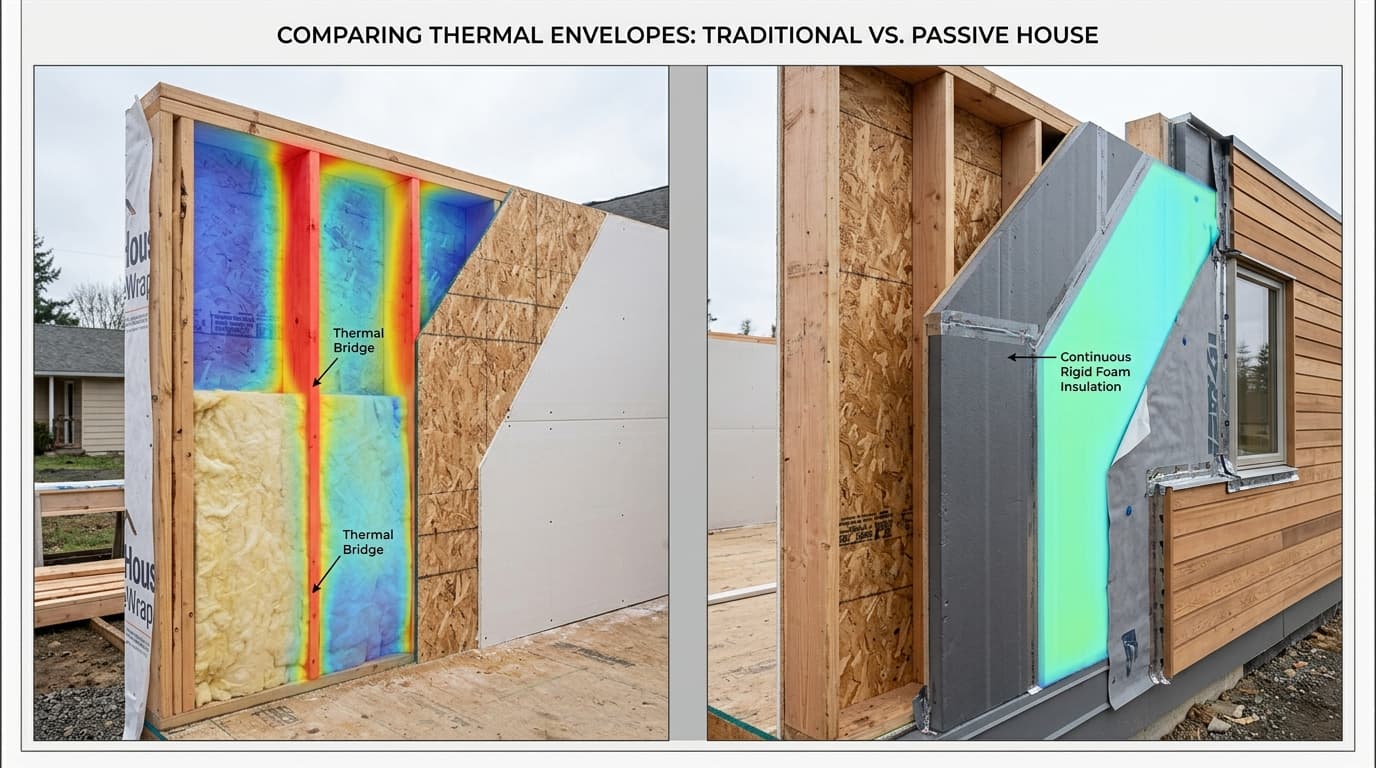
Continuous Exterior Insulation (CI): Eliminating Thermal Bridging in Modern Envelopes
Building science guide to continuous exterior insulation (CI): rigid mineral wool vs GPS vs polyiso, R-value physics, dew point calculations, and rainscreens.

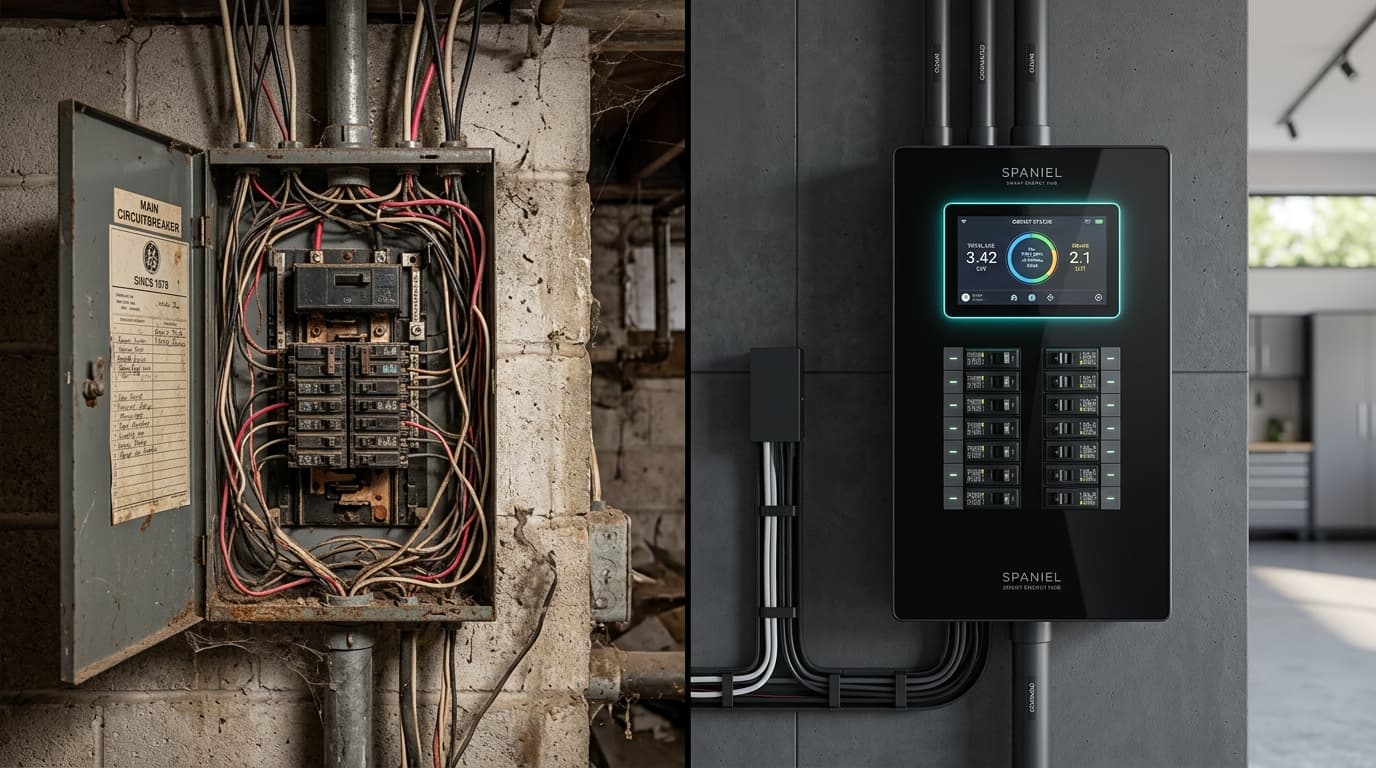
Smart Electrical Panels & Home Battery Storage: The 2026 Homeowner Automation Blueprint
Modern residential electrification: Span.io vs Leviton smart panels, dynamic circuit load shedding, Tesla Powerwall integration, and 200A vs 400A service.
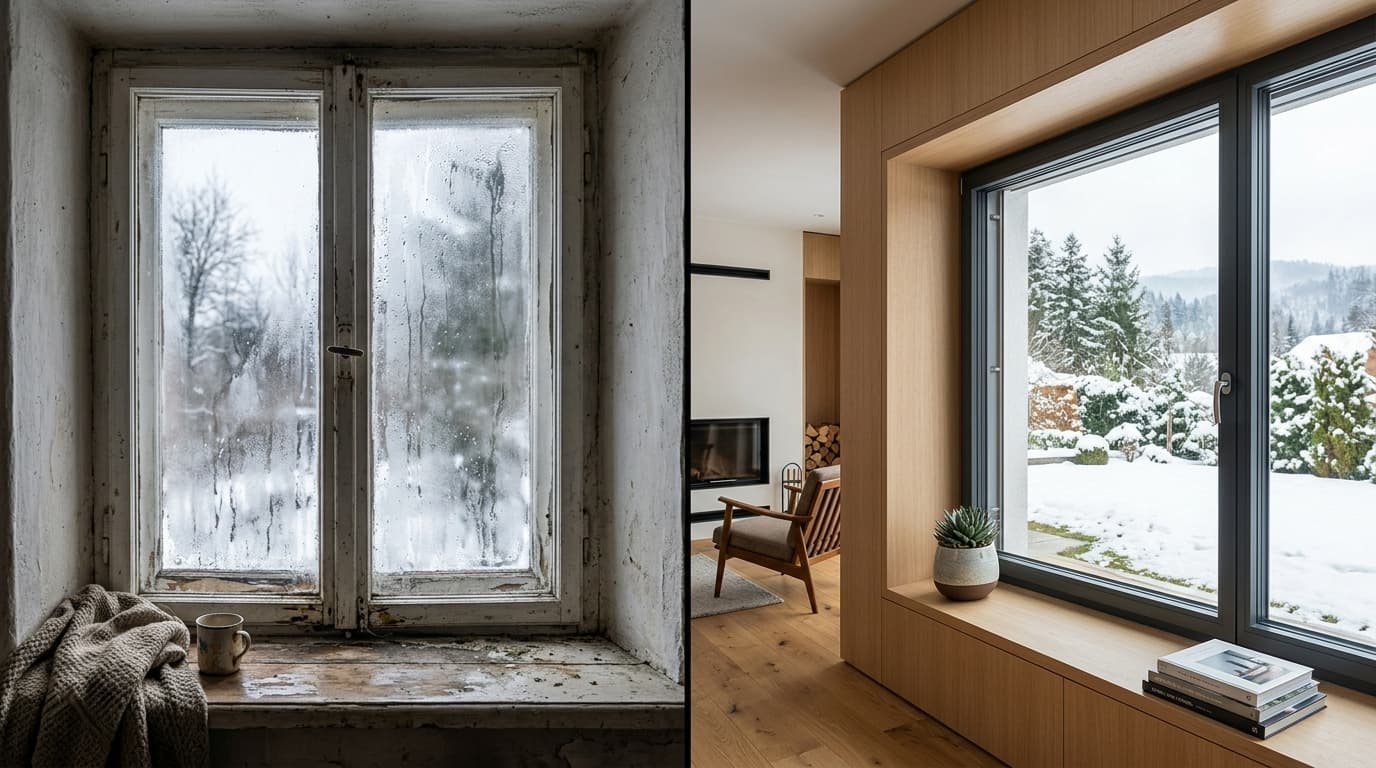
Passive House (Passivhaus) Principles for Remodeling: Airtightness & Triple-Pane Glazing
Apply German Passivhaus standards to residential renovations: achieving 0.6 ACH50, thermal bridge-free design, ERVs, and triple-pane krypton windows.