Whole-Home Water Treatment Science: Water Softeners, Catalytic Carbon & Point-of-Use RO
Protect luxury fixtures and health: municipal chloramine removal, ion-exchange water softeners, PFAS filtration, catalytic carbon, and remineralized reverse osmosis.

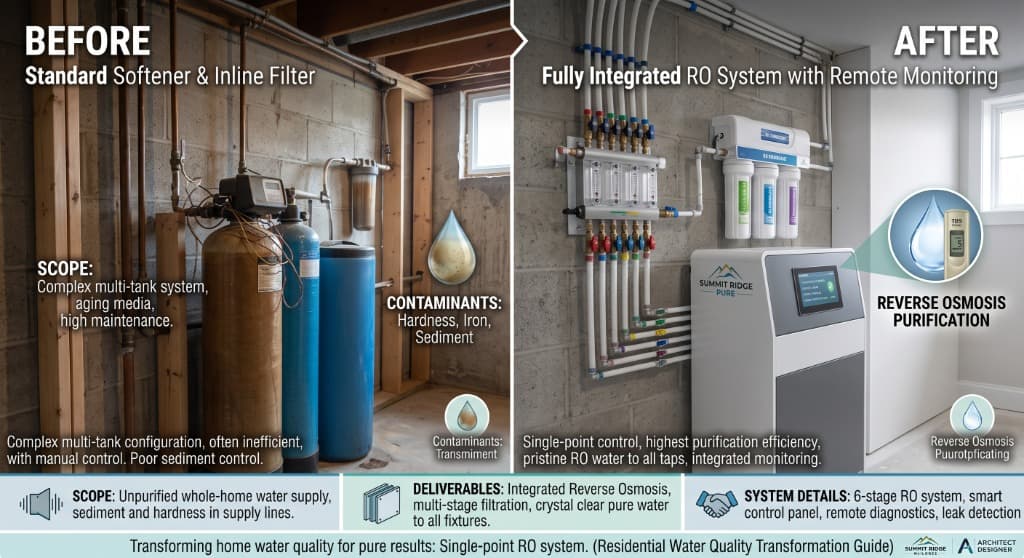
1. Executive Brief: The Hydrochemistry of Residential Water Quality
In luxury residential design and plumbing engineering, water is too often viewed merely as an abundant utility delivered by municipal mains or private wells. In chemical and material reality, tap water is a complex aqueous solvent carrying dissolved mineral cations, chemical disinfectants, volatile organic compounds (VOCs), microplastics, and heavy metal contaminants.
Left untreated, aggressive water chemistry wreaks continuous havoc on high-end residential infrastructure. Hard water minerals—primarily calcium ($\text{Ca}^{2+}$) and magnesium ($\text{Mg}^{2+}$)—precipitate out of solution at elevated temperatures, forming rock-hard calcite scale deposits inside tankless water heater heat exchangers, radiant hydronic manifolds, steam shower generators, and luxury espresso machines, destroying expensive appliances within 24 to 36 months.
Simultaneously, municipal water utilities have widely transitioned from free chlorine to chloramines (monochloramine, $\text{NH}_2\text{Cl}$) to control disinfection byproducts. Chloramines are exceptionally stable, highly corrosive to rubber plumbing gaskets and PEX fittings, and rapidly degrade the ceramic disc cartridges of luxury unlacquered brass and PVD plumbing fixtures. Furthermore, the pervasive presence of PFAS ("forever chemicals"), microplastics, and pharmaceutical residues presents documented biological health concerns.
+----------------------------------------------------------------------------------------------------+
|                         THE TRIPARTITE RESIDENTIAL WATER PURIFICATION APPARATUS                    |
+----------------------------------------------------+-----------------------------------------------+
|       POINT-OF-ENTRY (POE) WHOLE-HOME DEFENSE      |       POINT-OF-USE (POU) TARGETED CONSUMPTION |
+--------------------------+-------------------------+-----------------------------------------------+
| 1. Catalytic Carbon Bed  | 2. High-Efficiency Ion- | 3. Multi-Stage Reverse Osmosis (RO) Engine    |
| (Adsorption Filter)      | Exchange Softener       | (Hyper-Filtration + Calcite Remineralization) |
+--------------------------+-------------------------+-----------------------------------------------+
| - Catalytic carbon media | - Cross-linked cation   | - 0.0001 micron thin-film composite membrane  |
| - Strips chloramines,    |   resin beads (10%)     | - Removes 99%+ of PFAS, heavy metals, arsenic |
|   VOCs, chlorine, & THMs | - Exchanges Ca2+/Mg2+   | - Calcite remineralization restores pH to 8.0 |
| - Zero flow restriction  |   for harmless Na+/K+   | - Feeds dedicated prep sink & ice-maker lines |
+--------------------------+-------------------------+-----------------------------------------------+
Neutralizing these hydrochemical threats requires moving away from gimmicky "salt-free magnetic descalers" or generic countertop pitch-filters. True water defense requires an engineered Tripartite Treatment System: whole-home catalytic carbon adsorption, true ion-exchange water softening, and dedicated point-of-use multi-stage reverse osmosis with calcite remineralization.
---
2. Chemical Contaminant Spectrum & Water Chemistry Physics
To select the appropriate treatment technologies, one must understand the specific chemical and mineral species present in residential water supplies.
                  RESIDENTIAL WATER CONTAMINANT SPECTRUM & PHYSICAL IMPACT
   Contaminant Class    Chemical Species / Markers   Primary Damage Vector & Risk Profile
   ----------------------------------------------------------------------------------------------------
   Hardness Minerals    Calcium ($\text{Ca}^{2+}$),   Scale accumulation; ruins tankless heaters,
                        Magnesium ($\text{Mg}^{2+}$)  clouds glass shower enclosures, strips skin lipids
   Chemical Oxidizers   Chloramines ($\text{NH}_2\text{Cl}$), Destroys plumbing seals and PEX tubing; strong
                        Free Chlorine ($\text{HOCl}$) medicinal odor; suspected bladder cancer link
   Heavy Metals         Lead ($\text{Pb}$), Copper    Neurological toxicity, kidney damage; leached
                        ($\text{Cu}$), Arsenic ($\text{As}$) from legacy municipal pipes and copper solder
   Halogenated Organics Trihalomethanes (THMs),       Disinfection byproducts formed when chlorine
                        Haloacetic Acids (HAAs)       reacts with decaying plant matter; carcinogenic
   Emerging Toxins      PFAS / PFOA / PFOS,           Endocrine disruption, liver disease; persistent
                        Microplastics, Pharmaceuticals "forever chemicals" immune to biological breakdown
1. Water Hardness & The Langelier Saturation Index (LSI)
Water hardness is defined as the concentration of multivalent metallic cations in solution, expressed either in milligrams per liter ($\text{mg/L}$ or $\text{ppm}$) or Grains Per Gallon (GPG):
$$1\text{ GPG} = 17.118\text{ mg/L (ppm) of Calcium Carbonate } (\text{CaCO}_3)$$
       WATER HARDNESS CLASSIFICATION (WATER QUALITY ASSOCIATION - WQA)
   Hardness Category           Hardness in GPG        Hardness in mg/L (ppm)    Physical Manifestation
   ----------------------------------------------------------------------------------------------------
   Soft Water                  < 1.0 GPG              < 17.1 mg/L               Zero scale; rich soap lather
   Slightly Hard               1.0 - 3.5 GPG          17.1 - 60 mg/L            Minor mineral deposits
   Moderately Hard             3.5 - 7.0 GPG          60 - 120 mg/L             Scale crusts on faucets
   Hard Water                  7.0 - 10.5 GPG         120 - 180 mg/L            Severe appliance scaling
   Very Hard / Extreme Hard    > 10.5 GPG (Up to 30+) > 180 mg/L                Tankless heaters destroyed!
To predict whether water will precipitate scale or corrode plumbing pipes, engineers calculate the Langelier Saturation Index (LSI):
$$\text{LSI} = \text{pH} - \text{pH}_s$$
Where $\text{pH}$ is the measured water pH, and $\text{pH}_s$ is the saturation pH at which water is in chemical equilibrium with calcium carbonate.
- $\text{LSI} > 0$ (Super-Saturated): Water precipitates $\text{CaCO}_3$ scale onto hot metal surfaces. A tankless water heater operating with an LSI of $+1.5$ will accumulate a 1/8-inch thick insulating layer of limestone scale on its copper heat exchanger within 12 months, reducing heat transfer efficiency by 30% and causing thermal exchanger failure.
- $\text{LSI} < 0$ (Under-Saturated / Corrosive): Water is aggressive and will actively dissolve metal pipes, leaching toxic copper and lead into drinking water.
2. Free Chlorine vs. Chloramines
While traditional municipal systems treated water with gaseous chlorine ($\text{Cl}_2$), over 70% of major US utilities now utilize chloramines—synthesized by adding ammonia ($\text{NH}_3$) to chlorinated water.
- Why Standard Carbon Fails: Standard Granular Activated Carbon (GAC) made from bituminous coal or coconut shell easily removes free chlorine via basic physical absorption. However, chloramines have a strong covalent nitrogen-chlorine bond that standard carbon cannot break at normal residential flow rates (8 to 15 GPM).
- The Catalytic Solution: Removing chloramines requires Catalytic Activated Carbon (such as Calgon Carbon Centaur). Catalytic carbon undergoes high-temperature thermal gas processing that creates specialized catalytic surface sites that chemically reduce chloramines into harmless chloride ions ($\text{Cl}^-$) and nitrogen gas ($\text{N}_2$).
---
3. The Tripartite Water Treatment Architecture
Achieving pristine water quality across a 3,500+ sq. ft. luxury residence requires deploying three complementary treatment stages operating in series.
+----------------------------------------------------------------------------------------------------+
|                         TRIPARTITE WATER TREATMENT FLOW SCHEMATIC                                  |
+----------------------------------------------------------------------------------------------------+
|                                                                                                    |
|    MUNICIPAL WATER MAIN (3/4" - 1-1/4" Copper Line, 65 psi)                                        |
|          |                                                                                         |
|          v                                                                                         |
|    [STAGE 1: WHOLE-HOME CATALYTIC CARBON BACKWASH TANK] (Centaur Media)                            |
|    - Strips 99% of chloramines, chlorine, volatile organics, pesticides, and unpleasant odors.   |
|          |                                                                                         |
|          v                                                                                         |
|    [STAGE 2: WHOLE-HOME ION-EXCHANGE SOFTENER] (10% Cross-Linked Resin)                            |
|    - Exchanges calcium and magnesium for sodium/potassium; resets water hardness to < 0.5 GPG.     |
|          |                                                                                         |
|          +--------------------------------------------+                                            |
|          |                                            |                                            |
|          v (Softened, Chlorine-Free Water)            v (Softened Feed Line)                       |
|    [WHOLE-HOUSE PLUMBING DISTRIBUTION]          [STAGE 3: POINT-OF-USE UNDER-SINK RO]              |
|    - Showers, bathtubs, sinks, laundry,         - 5-Stage Thin-Film Composite (TFC) RO Membrane    |
|      tankless water heaters, steam generators.  - Strips PFAS, fluoride, arsenic, heavy metals.    |
|                                                 - Calcite remineralization restores pH to 8.2.     |
|                                                 - Feeds designer drinking faucet & ice-maker.      |
|                                                                                                    |
+----------------------------------------------------------------------------------------------------+
Stage 1: Point-of-Entry (POE) Whole-Home Catalytic Carbon Filtration
Mounted at the primary water service entrance where water enters the structure.
- Vessel Architecture: A 10"x54" or 12"x52" fiberglass-reinforced polymer (FRP) mineral tank containing 1.5 to 2.0 cubic feet of acid-washed catalytic carbon.
- Automatic Backwash Control: Governed by an intelligent electronic digital control valve (Fleck 5800SXT or Clack WS1). Every 7 to 14 days, the valve initiates an automatic reverse-flow backwash cycle that lifts the carbon bed, flushes accumulated sediment to the drain, and prevents media channeling.
Stage 2: Whole-Home Ion-Exchange Water Softener
Mounted directly downstream of the catalytic carbon filter.
- The Ion-Exchange Chemistry: The tank contains millions of microscopic, porous sulfonated polystyrene beads known as cation exchange resin, pre-charged with sodium ($\text{Na}^+$) or potassium ($\text{K}^+$) ions.
- When hard water flows downward through the resin bed, the divalent calcium ($\text{Ca}^{2+}$) and magnesium ($\text{Mg}^{2+}$) ions have a much stronger positive electrostatic charge than the monovalent sodium ions. The resin beads capture the calcium and magnesium, releasing harmless sodium ions into the water stream:
$$\text{Resin}-\text{Na}_2 + \text{Ca}^{2+} \longrightarrow \text{Resin}-\text{Ca} + 2\text{Na}^+$$
- 10% Cross-Linked Resin Standard: Never specify standard 8% cross-linked resin. High-efficiency systems deploy 10% cross-linked resin, which provides superior resistance to thermal degradation, chemical oxidation, and physical bead fracturing, lasting 15 to 20 years.
Stage 3: Point-of-Use (POU) Multi-Stage Reverse Osmosis with Remineralization
While whole-home soft water protects appliances and skin, softened water is not optimized for human drinking: it contains elevated sodium levels and does not remove fluoride, arsenic, or microscopic PFAS.
- The RO Engine: Installed under the kitchen prep sink, water is forced under pressure through a semi-permeable Thin-Film Composite (TFC) Polyamide Membrane with a microscopic pore size of 0.0001 microns (500,000 times smaller than the diameter of a human hair).
- The Filtration Spectrum: The RO membrane strips 99.2% to 99.8% of all Total Dissolved Solids (TDS), including PFAS, microplastics, lead, nitrates, and pharmaceutical residues.
- The Remineralization Mandate: Raw RO water has a corrosive, acidic pH (5.8 to 6.2) and tastes flat because all healthy minerals have been stripped. The water must pass through an inline Calcite and Corosex Remineralization Cartridge that dissolves controlled micro-quantities of calcium carbonate and magnesium, raising the water to a delicious, alkaline pH of 7.5 to 8.5.
---
4. Comprehensive Financial Schedule: Luxury Water Treatment Suite
Below is an empirical, institutional cost schedule for engineering, procuring, and installing a comprehensive Tripartite Water Treatment System in a 4,000 sq. ft. luxury residence.
                  4,000 SQ. FT. RESIDENTIAL WATER TREATMENT BUDGET
   System Scope / Equipment Component             Specification / Model Typical Cost Range ($)
   -----------------------------------------------------------------------------------------------
   Comprehensive Third-Party Certified Laboratory Complete 120-Compound $350 - $650
   Water Analysis (National Testing Labs / Tap Score) Drinking Water Panel
   Whole-Home Catalytic Carbon Filter System      12"x52" Tank, Clack   $2,200 - $3,400
   (2.0 cu. ft. Centaur Media + Fleck 5800 Valve) WS1 Digital Valve
   High-Capacity Commercial Water Softener        48,000 Grain, 10%     $1,850 - $2,850
   (10% Cross-Linked Resin + Digital Metered Valve) Cross-Linked Resin
   Commercial-Grade POU Reverse Osmosis System    5-Stage TFC, 75 GPD,  $1,200 - $1,850
   with Calcite Alkaline Remineralization Cartridge Permeate Pump Included
   High-Flow 1" Lead-Free Copper Bypass Manifold  Type L Copper with    $850 - $1,400
   with Dual Pressure Gauges & Sample Ports       Quarter-Turn Ball Valves
   Plumbing Installation Labor & Code Drainage    Master Plumber Rate   $2,400 - $3,800
   (Dedicated 1.5" drain air gap + electrical run)
   Annual Consumables (1 Year Salt + RO Filters)  Solar Salt + Cartridges $250 - $400
   -----------------------------------------------------------------------------------------------
   TOTAL WATER PURIFICATION CAPITAL INVESTMENT                          $9,100 - $14,350
---
5. The 5-Phase Trade Installation & Commissioning Protocol
Installing whole-home water treatment requires precision plumbing execution to prevent pressure drops, water hammer, and code drainage violations.
                      THE 5-PHASE WATER COMMISSIONING ROADMAP
   Phase       Title                     Key Deliverables & Action Items
   ---------------------------------------------------------------------------------------------
   Phase 1     Hydrochemical Diagnostics - Draw 1-liter stagnant sample for heavy metal testing
               & Flow Rate Sizing        - Draw 1-liter flushed sample for hardness/VOC analysis
                                         - Calculate peak coincident flow rate (GPM demand)
   Phase 2     Bypass Manifold Rough-In  - Solder 1" or 1-1/4" Type L copper primary loop
               & Isolation Valves        - Install three-valve manual bypass manifold
                                         - Mount upstream and downstream liquid-filled pressure gauges
   Phase 3     Vessel Loading & Resin    - Funnel catalytic carbon and resin into tanks over gravel bed
               Hydration Soaking         - Pre-soak resin in water for 24 hours to prevent air binding
                                         - Install brine tank float assembly and safety overflow line
   Phase 4     Drain Air-Gap Plumbing    - Route 1/2" high-pressure backwash drain lines
               & Electrical Connection   - Install statutory UPC-approved physical air gap fitting
                                         - Plug digital control valves into dedicated GFCI receptacles
   Phase 5     Backwash Cycling & Field  - Execute manual 60-minute initial backwash cycle
               TDS / Hardness Titration  - Perform Hach drop-count soap titration (< 0.5 GPG verified)
                                         - Measure RO permeate TDS (verify > 95% rejection efficiency)
---
6. Forensic Failure Analysis: 5 Real-World Water Disasters
+----------------------------------------------------------------------------------------------------+
|                         ROOT CAUSE FAILURE MATRIX: RESIDENTIAL WATER                               |
+-----------------------+------------------------+---------------------------------------------------+
| Failure Scenario      | Physical & Financial   | Forensic Root Cause & Prevention Protocol         |
|                       | Consequence            |                                                   |
+-----------------------+------------------------+---------------------------------------------------+
| 1. The Corrosive Pure | $28,000 Whole-House    | Plumber installed whole-house RO without remineral-|
| Acidic RO Leaching    | Repipe; Blue Staining  | ization. Pure acidic water (pH 5.8) dissolved all |
|                       |                        | copper pipes, flooding home with pinhole leaks.   |
+-----------------------+------------------------+---------------------------------------------------+
| 2. Direct-Tied Brine  | $45,000 Biohazard Loss;| Plumber shoved brine drain directly into sewer    |
| Sewer Contamination   | E. Coli in Water Line  | standpipe without an air gap. Sewer backed up     |
|                       |                        | directly into water softener and drinking supply! |
+-----------------------+------------------------+---------------------------------------------------+
| 3. Un-Softened Steam  | $14,500 Steam Shower   | Contractor connected luxury steam generator to    |
| Generator Calcification| Teardown; Slab Demo   | un-softened hot water line. Heating elements      |
|                       |                        | calcified and burned out in 14 months; total loss.|
+-----------------------+------------------------+---------------------------------------------------+
| 4. Chloramine Carbon  | $6,200 Carbon Dump;    | Installed standard cheap coconut GAC for water    |
| Rapid Exhaustion      | Strong Chemical Smell  | with chloramines. Carbon exhausted in 90 days;    |
|                       |                        | chloramines dissolved rubber flappers in toilets. |
+-----------------------+------------------------+---------------------------------------------------+
| 5. Pressure Choke     | Water Pressure Dropped | Plumber installed 3/4" small filter on 1-1/4" main|
| Under-Sized Valve     | from 65 psi to 22 psi  | service line. Whenever two showers ran, water flow|
|                       |                        | dropped to a trickle; valve had to be replaced.   |
+-----------------------+------------------------+---------------------------------------------------+
---
7. Real-World Case Studies: Well Water Recovery vs. Municipal Chloramines
Case Study 1: The Texas Hill Country High-Hardness Well Transformation
- Property Profile: 5,500 sq. ft. luxury ranch residence outside Austin, TX. Water sourced from a 450-foot deep limestone aquifer well.
- The Raw Water Chemistry:
- * Hardness: 28 GPG (479 mg/L - Extreme Hardness).
- * Hydrogen Sulfide ($\text{H}_2\text{S}$): 5 ppm (rotten egg odor).
- * Iron: 8 ppm (severe orange rust staining on porcelain).
- The Multi-Stage Engineering Solution:
- *Aeration & Oxidation:* Installed an Air Injection Oxidizing (AIO) filter with Katalox Light media to precipitate dissolved iron and strip hydrogen sulfide gas.
- *Softening:* Installed dual alternating 12"x52" water softeners (64,000 grain capacity) with 10% cross-linked resin, providing continuous 24/7 soft water with zero downtime during regeneration.
- *Purification:* Installed an under-sink commercial-grade RO system feeding prep sinks, pot fillers, and the Sub-Zero refrigerator.
- Outcome: Water hardness reduced from 28 GPG down to < 0.2 GPG. Complete elimination of sulfur odor and iron staining, protecting over $45,000 in luxury brass plumbing trim and Sub-Zero refrigeration units.
Case Study 2: The Scottsdale Municipal Chloramine & PFAS Remediation
- Property Profile: 4,200 sq. ft. contemporary architectural home in Scottsdale, AZ. Municipal tap water sourced from the Central Arizona Project (CAP).
- The Contamination Profile:
- * Monochloramine disinfectant: 2 ppm (strong pool-water chemical odor).
- * PFAS / PFOA: 42 parts per trillion (ppt) (exceeding EPA maximum contaminant advisory limits).
- * Total Dissolved Solids: 720 ppm.
- The Engineering Execution:
- * Installed a high-flow 5 cu. ft. Centaur Catalytic Carbon Backwash System with a commercial Clack WS1.25 valve capable of delivering 18 GPM at < 3 psi drop.
- * Paired with a high-efficiency metered water softener.
- * Installed a 6-stage Point-of-Use Reverse Osmosis engine with an integrated permeate pump (reducing waste water by 80%) and calcite alkaline remineralization.
- Outcome: Municipal chloramines dropped to non-detectable levels (< 0.05 ppm). RO drinking water tested at zero PFAS (< 1 ppt) with a crisp, natural alkaline pH of 8.2 and TDS of 35 ppm, matching premier bottled mineral waters.
---
8. CSI MasterFormat Division 22 Specifications: Water Treatment Systems
+----------------------------------------------------------------------------------------------------+
|                         CSI DIVISION 22 WATER PURIFICATION SPECIFICATIONS                          |
+----------------------------------------------------------------------------------------------------+
| Section 22 31 00 - Residential Water Softening Equipment                                           |
| 1. Softener shall be an automatic, demand-initiated regeneration system with microprocessor-based  |
|    metered control valve (Clack WS1 or Fleck 5800SXT).                                            |
| 2. Resin Media: High-capacity, 10% cross-linked strong acid cation polystyrene sulfonate resin,     |
|    certified to NSF/ANSI Standard 44 and Standard 61.                                              |
| 3. Brine Tank: Heavy-duty rotationally molded polyethylene with interior salt grid plate, brine    |
|    well, and safety float shutoff valve to prevent accidental overflow.                            |
+----------------------------------------------------------------------------------------------------+
| Section 22 31 16 - Catalytic Carbon Media Adsorption Filters                                       |
| 1. Filter media shall be virgin, coal-based granular catalytic activated carbon (Calgon Centaur   |
|    or equal) with minimum peroxide reduction capacity of 0.25 ppm/min (ASTM D5832).                |
| 2. Backwash Cycle: Valve shall execute automatic reverse-flow backwash and rapid rinse based on    |
|    volumetric water consumption or statutory 14-day calendar override.                             |
+----------------------------------------------------------------------------------------------------+
| Section 22 31 23 - Point-of-Use Reverse Osmosis Systems                                            |
| 1. RO system shall be certified under NSF/ANSI Standard 58 for the reduction of TDS, Fluoride,     |
|    Arsenic, Lead, and Perfluorooctanoic Acid (PFOA / PFOS).                                        |
| 2. Post-Filtration: Must include an inline calcite / magnesium remineralization cartridge capable  |
|    of elevating finished drinking water pH to between 7.5 and 8.5.                                 |
| 3. Drain Discharge: RO concentrate line must terminate through a certified statutory air gap      |
|    fitting conforming to ASME A112.1.2. Direct mechanical connection to drain is strictly prohibited.|
+----------------------------------------------------------------------------------------------------+
---
9. Plumbing Code Mandates: Drainage, Air Gaps & NSF Certifications
Plumbing water filtration systems must comply with the Uniform Plumbing Code (UPC) and International Plumbing Code (IPC):
                  STATUTORY WATER TREATMENT CODE & TESTING MATRIX
   Code / Standard Authority    Statutory Mandate & Technical Scope
   ----------------------------------------------------------------------------------------------------
   UPC Section 603.5.15         Mandatory Physical Air Gap: Water treatment backwash and reject lines
   (Backflow Prevention)        MUST discharge through an approved physical air gap into an open fixture
                                or waste standpipe. Direct slip-joint connections are strictly illegal.
   NSF/ANSI Standard 42         Aesthetic Effects: Certifies filtration reduction of chlorine, chloramines,
                                taste, odor, and particulate matter.
   NSF/ANSI Standard 53         Health Effects: Certifies the reduction of specific health contaminants,
                                including Lead, VOCs, MTBE, and Cryptosporidium cysts.
   NSF/ANSI Standard 58         Reverse Osmosis: Certifies structural integrity, TDS reduction, and
                                specific chemical removal rates for residential RO membrane systems.
   NSF/ANSI Standard 61         Drinking Water System Components: Guarantees that no toxic chemicals,
                                plasticizers, or lead leach into water from the filtration hardware.
The Critical Statutory Air Gap Rule
The most common code violation committed by amateur plumbers is connecting a water softener backwash hose or RO reject tube directly into a plumbing drain pipe with a tight plastic clamp.
- Under UPC Section 603.5.15, if a municipal sewer line or household septic system backs up, raw domestic sewage can be siphoned under negative pressure directly backward through the drain tube into the mineral tank.
- From there, raw sewage and pathogenic bacteria are injected into the home's potable drinking water lines.
- The code mandates a Physical Air Gap: a minimum vertical distance equal to twice the effective diameter of the drain pipe (minimum 1.0 inch clear) between the drain hose discharge and the flood-level rim of the receptor standpipe.
---
10. Extended Technical FAQs: Residential Water Treatment Science
Q1: Is it safe to drink softened water, and does it add significant sodium to my diet?
Yes, softened water is completely safe for healthy adults, but it does add a small, calculated amount of sodium.
- For every 1 GPG of hardness removed, the ion-exchange process adds approximately 7.5 milligrams of sodium per quart of water.
- If your water has 10 GPG of hardness, drinking two quarts of softened water adds approximately 150 mg of sodium—equivalent to eating a single slice of white bread.
- However, for individuals on strict medically supervised sodium-restricted diets, or those who dislike the taste of softened water, the industry standard is to drink water exclusively from the Point-of-Use Reverse Osmosis system, which strips 99% of all added sodium, delivering pure, mineral-balanced water.
Q2: Why are "Salt-Free Water Conditioners" (Template Assisted Crystallization) not true softeners?
"Salt-free conditioners" do not soften water. They use Template Assisted Crystallization (TAC) media:
- TAC media does not remove calcium or magnesium from the water. Instead, it converts dissolved minerals into microscopic, insoluble calcite seed crystals that flow harmlessly down the drain without sticking to cold pipes.
- The Failure Mode: When water is heated above 140°F (inside tankless water heaters, steam showers, or dishwashers) or when water evaporates on glass shower doors, the chemical bonds break. The calcium falls out of suspension, forming harsh limestone crusts.
- Only a true salt-based ion-exchange softener physically extracts the calcium and magnesium ions from the water, permanently preventing scale formation under high-heat conditions.
Q3: Can I soften water using Potassium Chloride instead of Sodium Chloride?
Yes. Potassium chloride ($\text{KCl}$) can be substituted directly for sodium chloride ($\text{NaCl}$) in any standard ion-exchange water softener without modifying the mechanical hardware.
- Advantages: Potassium is an essential human nutrient and plant fertilizer. Backwash brine discharged onto lawns or gardens will not burn vegetation like sodium salt.
- Disadvantages: Potassium chloride pellets cost approximately three to four times more than standard sodium solar salt ($28 to $35 per 40-lb bag vs. $8 to $10 per bag). Furthermore, potassium pellets are slightly less soluble at cold temperatures, requiring regular stirring to prevent salt bridging in the brine tank.
Q4: Why shouldn't un-remineralized Reverse Osmosis water be plumbed through copper pipes?
Pure, un-remineralized reverse osmosis water is a hyper-aggressive, under-saturated solvent:
- Because it has been stripped of 99% of its dissolved minerals, RO water has an acidic pH (typically 5.8 to 6.3) and an extremely low Total Dissolved Solids count (< 10 ppm).
- When acidic RO water is pumped through metallic copper or brass piping (such as a copper line running to a luxury refrigerator ice-maker), the water aggressively attacks the metal, leaching copper into the ice. Over time, the copper develops microscopic pinhole leaks, causing severe concealed water damage.
- Always plumb RO distribution lines using high-density polyethylene (PE), cross-linked polyethylene (PEX), or Teflon (PTFE) tubing, and ensure the water passes through an inline calcite remineralization cartridge to buffer its pH.
Q5: How often do whole-home filtration media and RO cartridges need to be replaced?
A properly maintained luxury residential water treatment system operates on a predictable maintenance cycle:
- Point-of-Entry Catalytic Carbon Media: Replaced every 5 to 7 years (Centaur carbon treats roughly 1,000,000 gallons of municipal water before adsorption sites saturate).
- Ion-Exchange Softener Resin: Replaced every 15 to 20 years (when using 10% cross-linked resin protected by an upstream carbon filter).
- RO Pre-Filters (Sediment & Carbon Block): Replaced every 12 months to protect the delicate RO membrane from chlorine damage and particulate fouling.
- RO TFC Membrane: Replaced every 3 to 5 years (verified when TDS rejection efficiency drops below 90%).
- Calcite Remineralization Cartridge: Replaced every 12 to 18 months as the natural mineral media slowly dissolves into the drinking stream.
Q6: Can whole-home water treatment be installed in a home with private septic systems?
Yes, but the backwash drain plumbing requires specific consideration.
- State environmental agencies and plumbing codes permit water softener backwash brine to discharge into modern septic tanks. Research conducted by the National Sanitation Foundation (NSF) confirmed that the volume of brine discharge does not harm anaerobic septic bacteria or disrupt sludge settling.
- However, in areas with delicate soil drainage fields or older cesspools, plumbers can install a dedicated dry well or french drain pit to receive softener backwash discharge, diverting salty water completely away from the primary septic system.
Q7: What are the primary certifications to look for when evaluating water treatment equipment?
Never purchase un-certified water treatment equipment based on marketing claims. Look for independent certification marks from the Water Quality Association (WQA) or Underwriters Laboratories (UL) certifying compliance with:
- NSF/ANSI Standard 42: Verified reduction of chlorine, taste, odor, and particulate matter.
- NSF/ANSI Standard 44: Verified water softener hardness reduction capacity, efficiency ratings, and structural pressure burst testing.
- NSF/ANSI Standard 53: Verified health contaminant reduction (Lead, Mercury, VOCs, MTBE).
- NSF/ANSI Standard 58: Verified Reverse Osmosis membrane performance, chemical reduction, and recovery efficiency.
- NSF/ANSI Standard 61 / NSF 372: Guarantees that all wetted components, fittings, valves, and media meet statutory lead-free mandates and do not leach toxic chemicals into potable water.
Frequently Asked Questions
Written by Elena Rostova, LEED AP
Building Science & Energy Efficiency SpecialistElena is an architectural engineer and certified LEED AP BD+C consultant. Her work centers on thermal envelope dynamics, continuous insulation systems, cold-climate inverter heat pumps, and achieving Net-Zero residential benchmarks.
Related Research in Smart & Sustainable
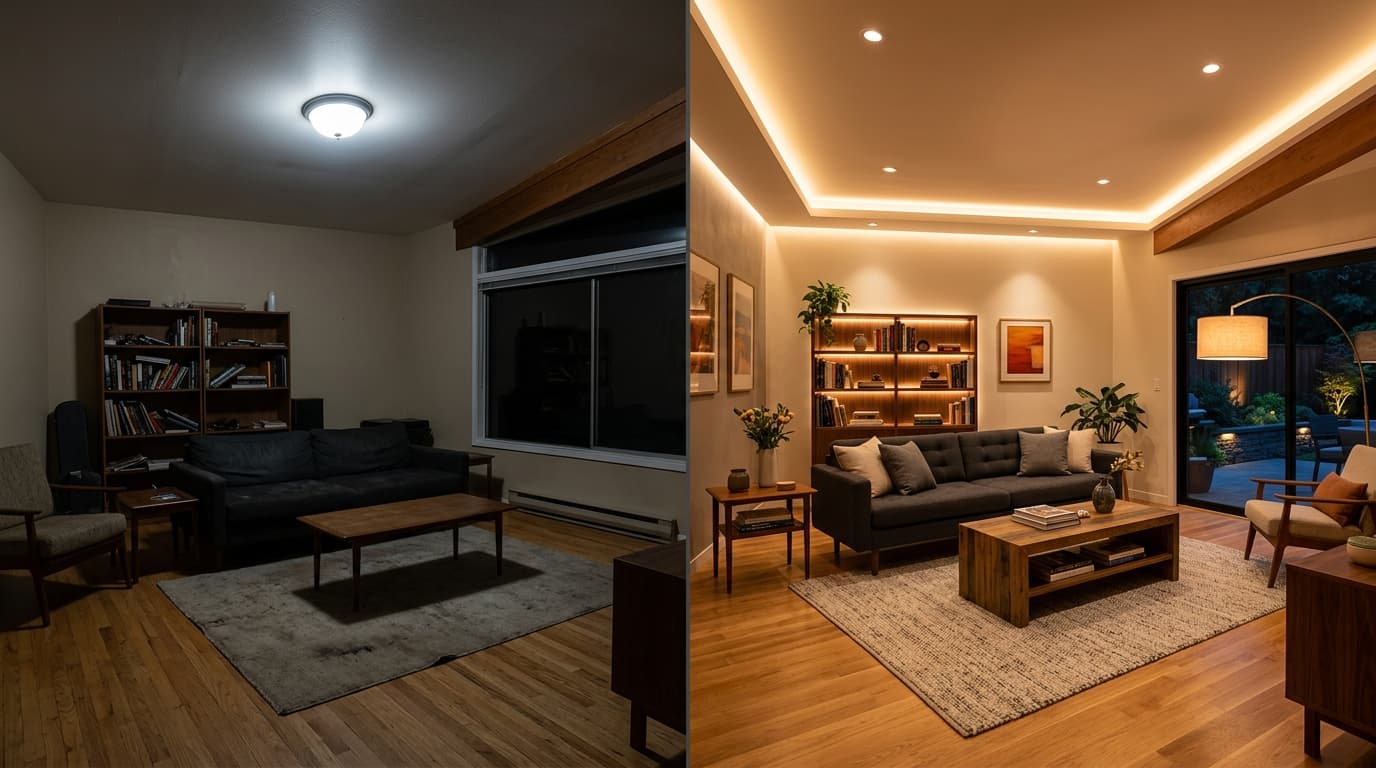
Architectural Lighting Design: Kelvin Color Temperature, 95+ CRI & Layered Illumination
Master luxury residential lighting design: 2700K vs 3000K Kelvin, Color Rendering Index (CRI 95+), glare mitigation, and task-ambient-accent layering.

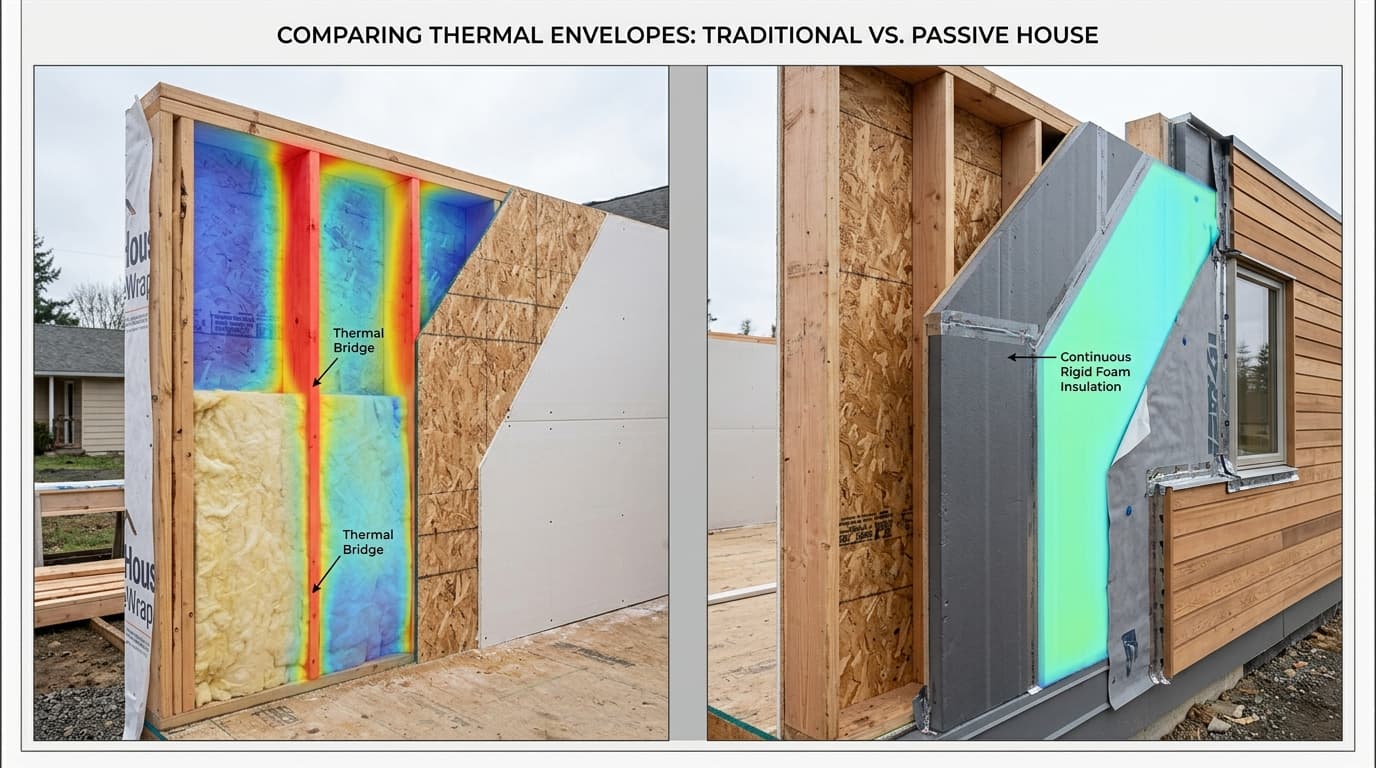
Continuous Exterior Insulation (CI): Eliminating Thermal Bridging in Modern Envelopes
Building science guide to continuous exterior insulation (CI): rigid mineral wool vs GPS vs polyiso, R-value physics, dew point calculations, and rainscreens.
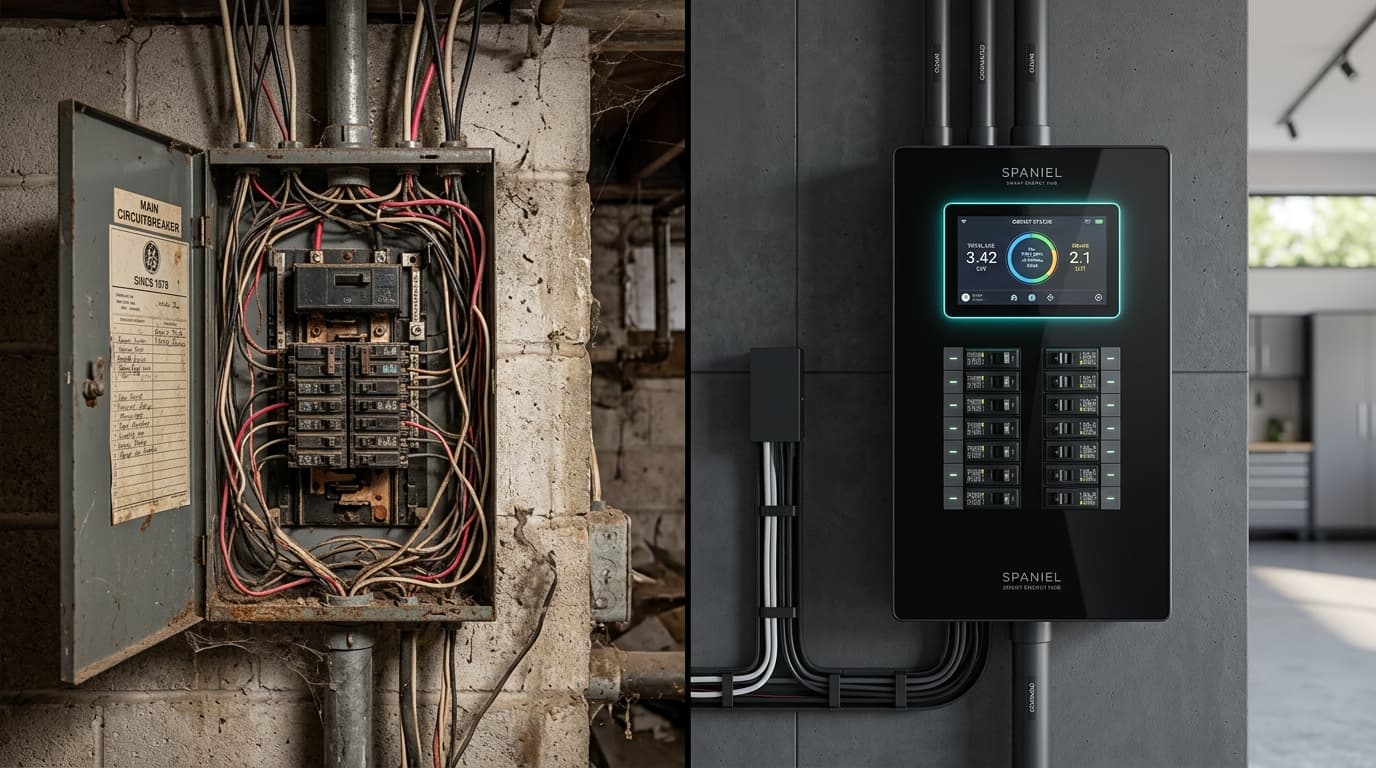
Smart Electrical Panels & Home Battery Storage: The 2026 Homeowner Automation Blueprint
Modern residential electrification: Span.io vs Leviton smart panels, dynamic circuit load shedding, Tesla Powerwall integration, and 200A vs 400A service.